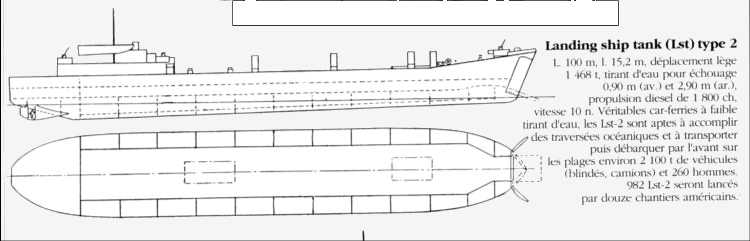
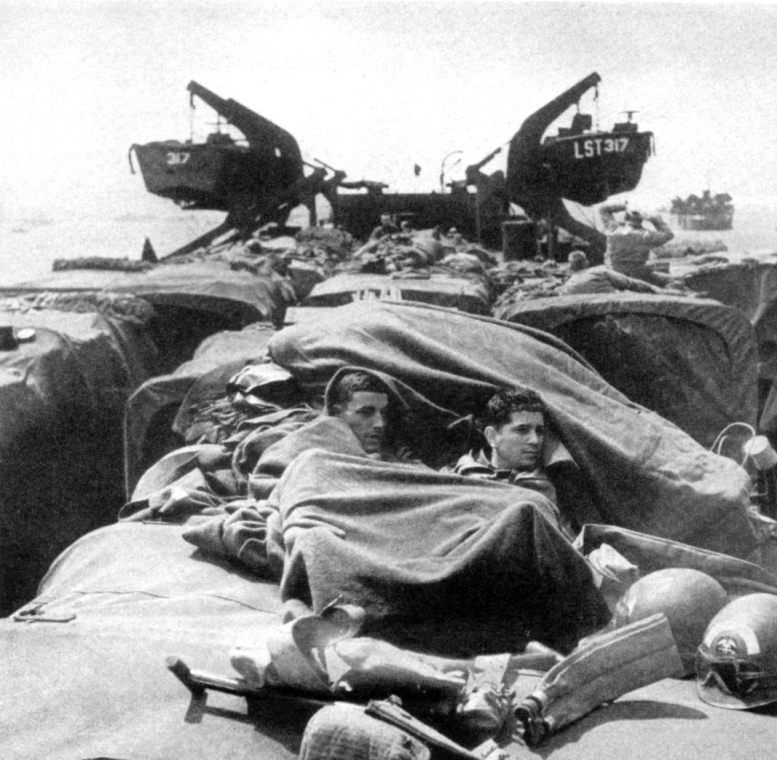
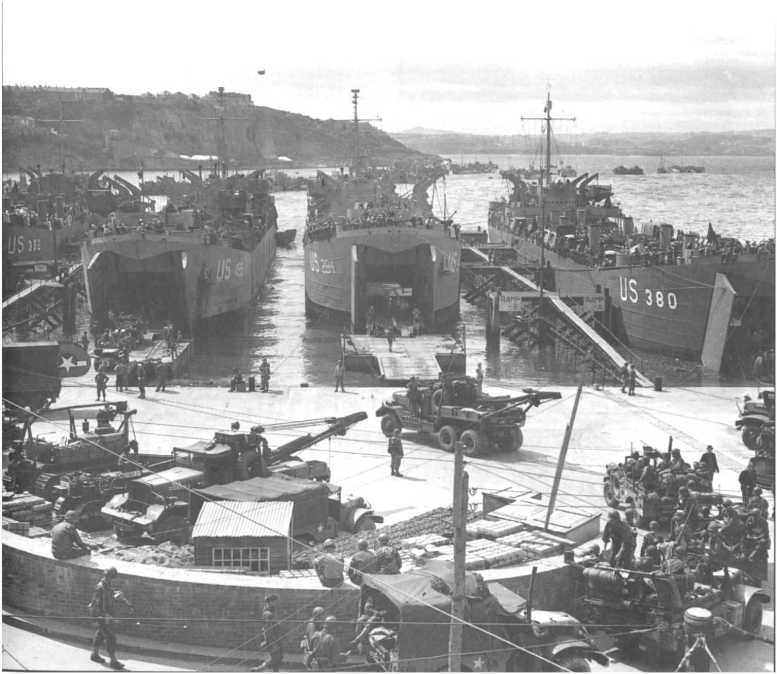
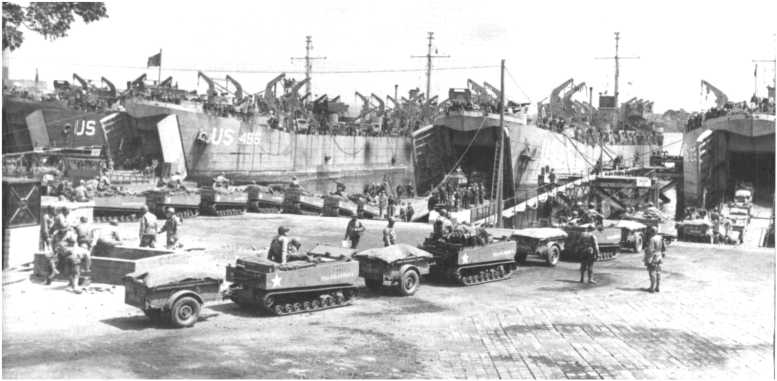
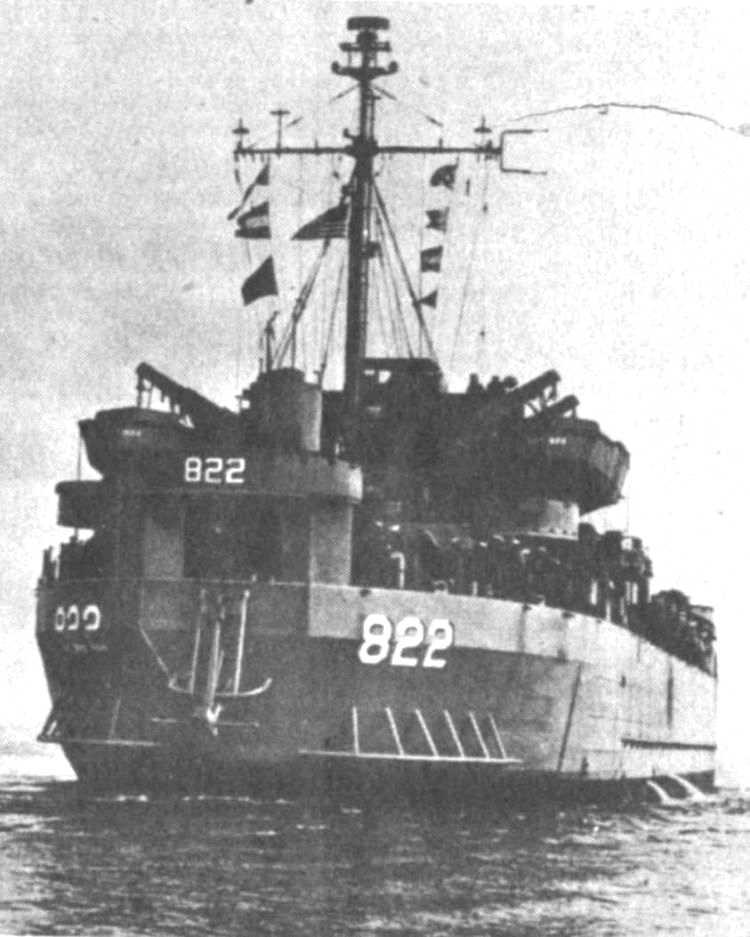
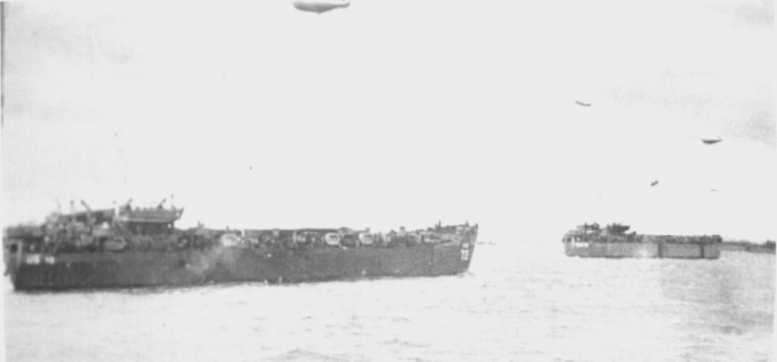
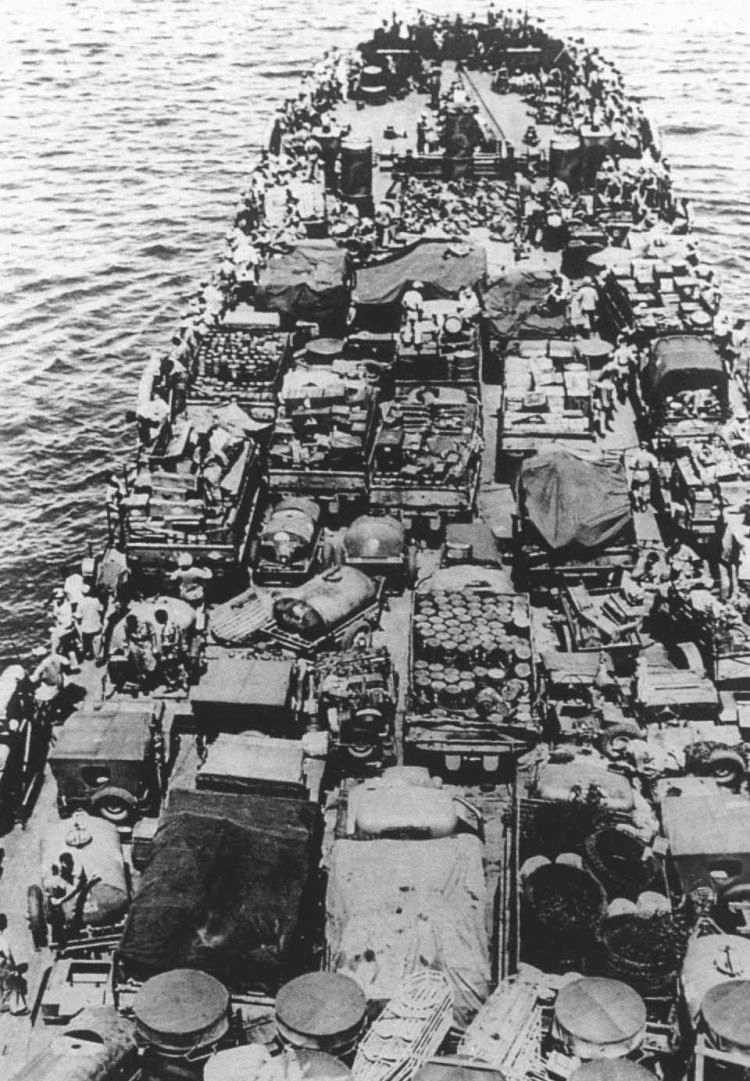
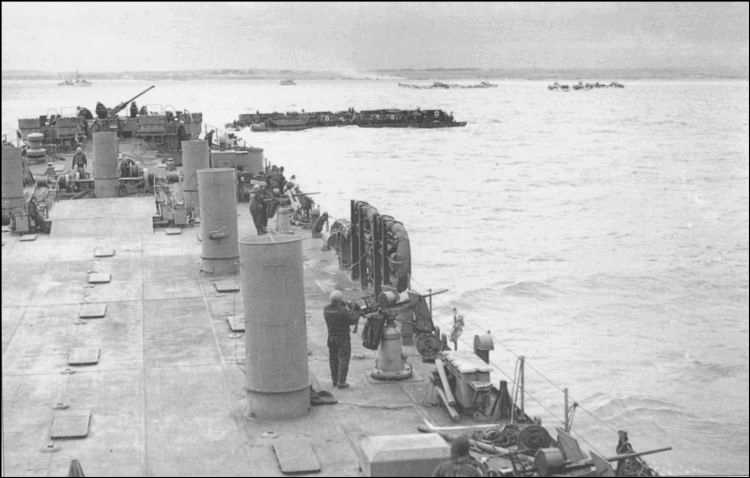
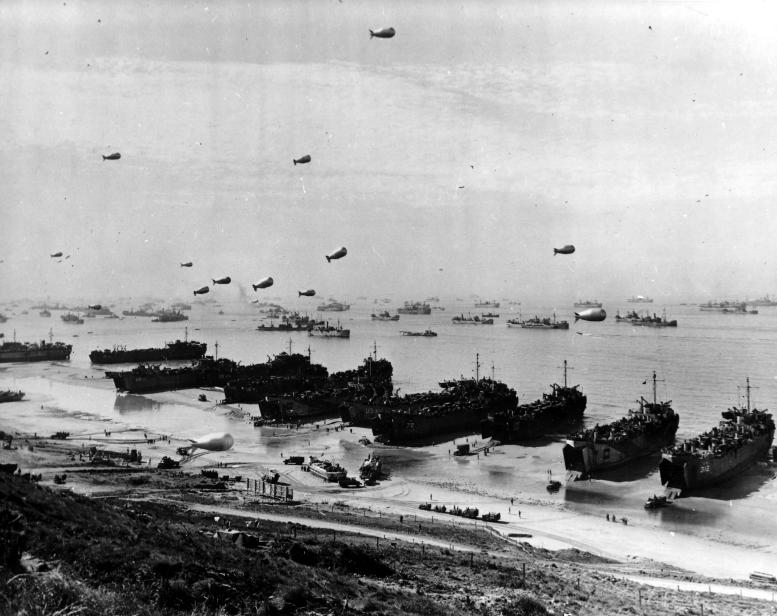
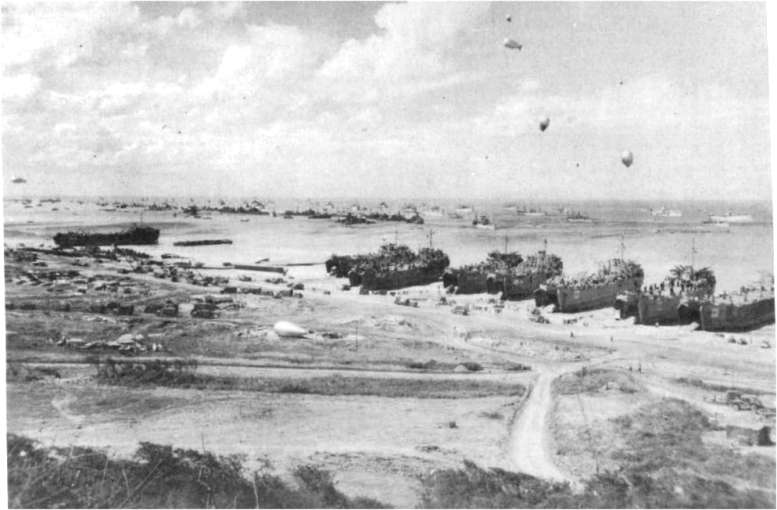
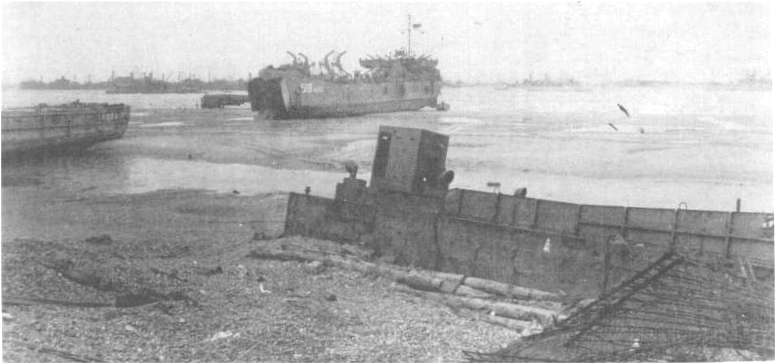
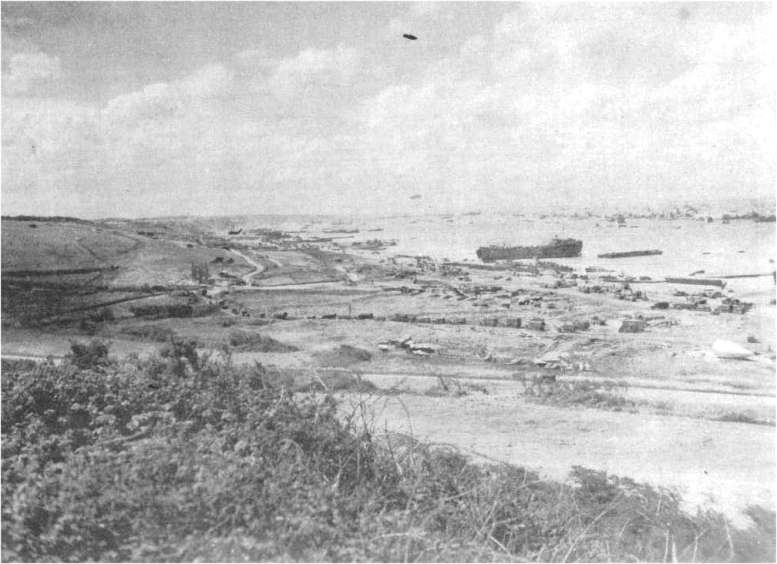
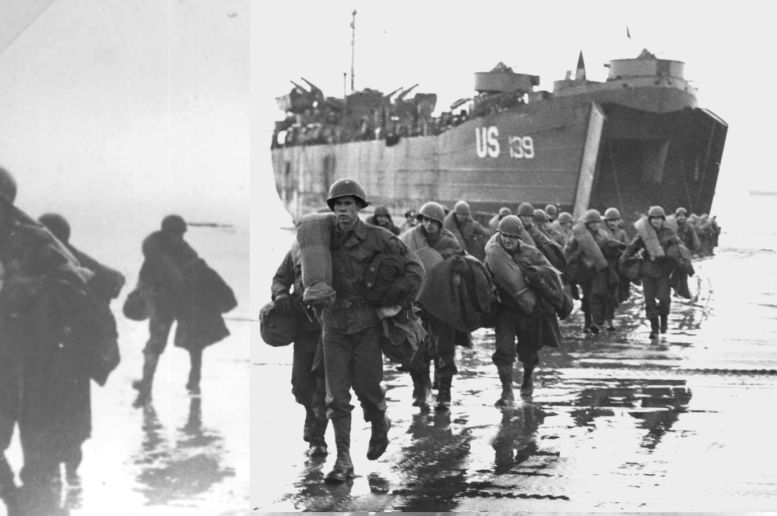
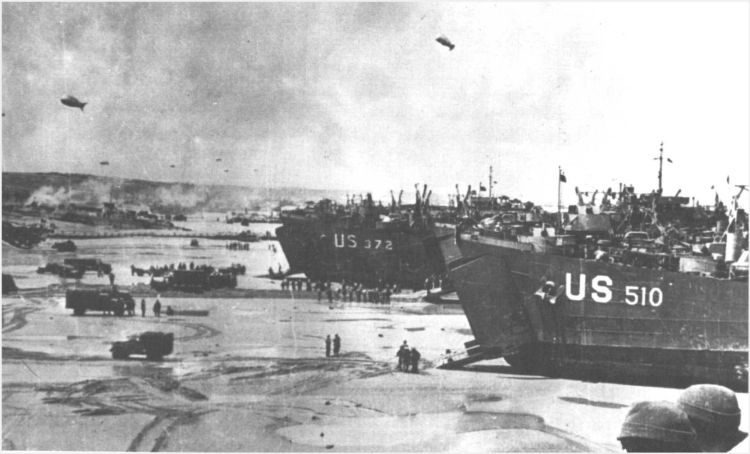
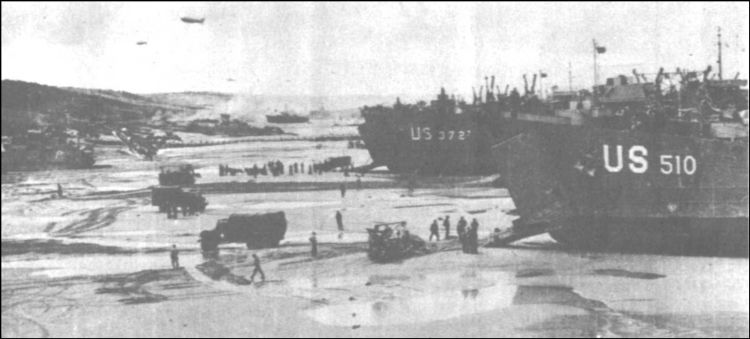
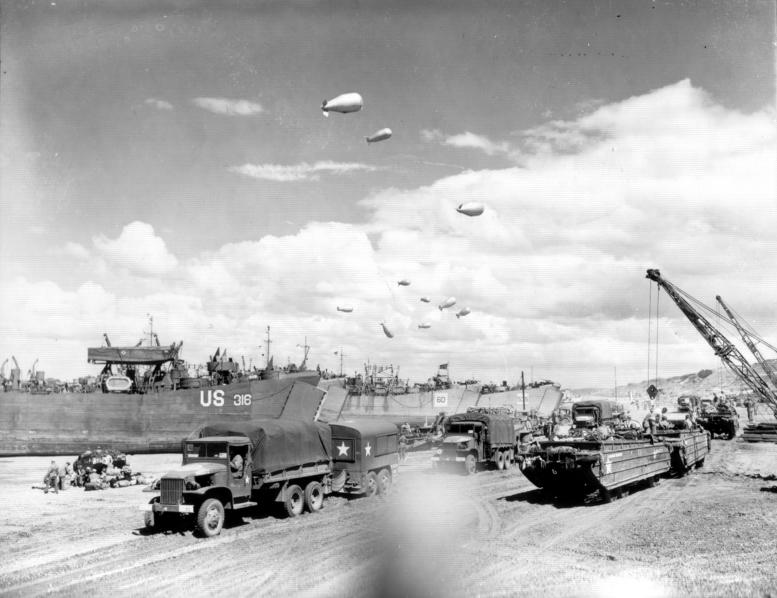
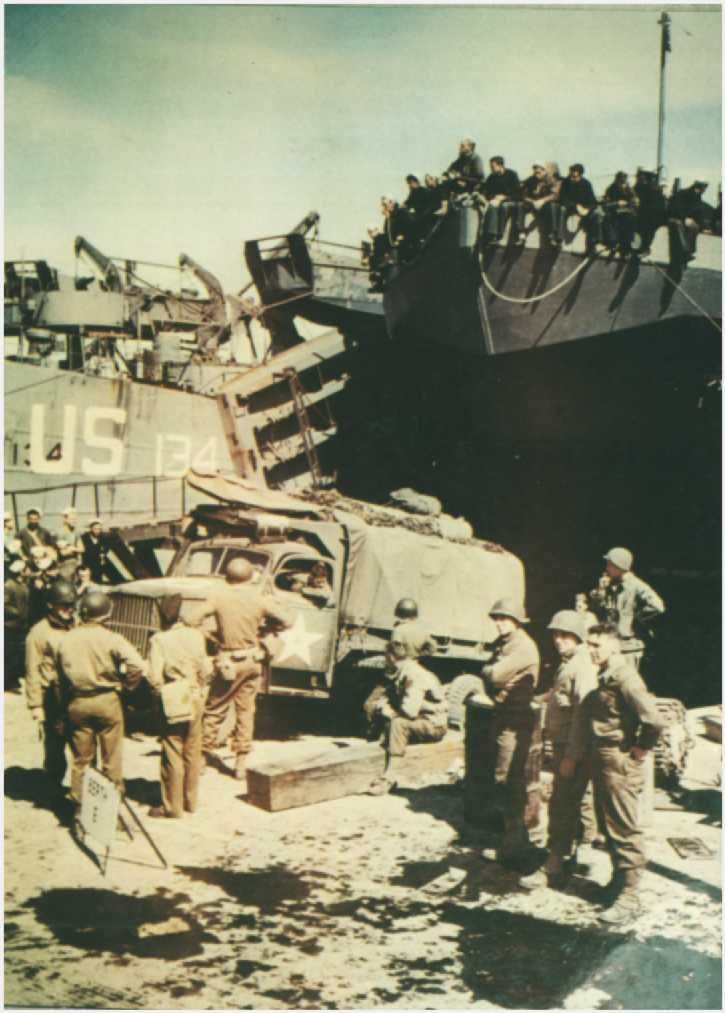
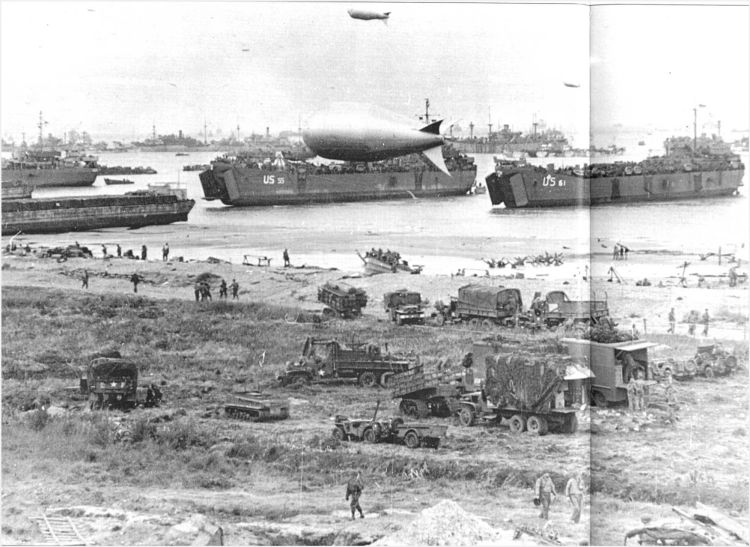
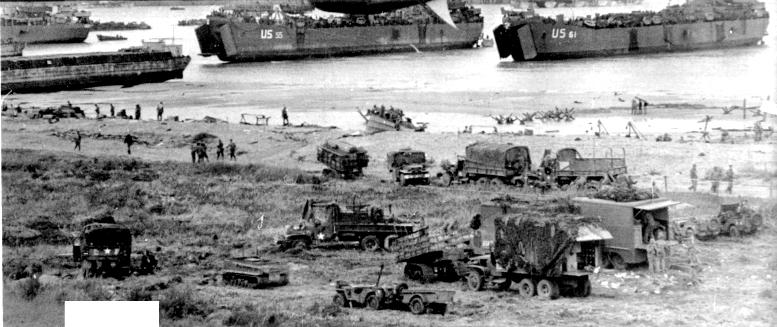
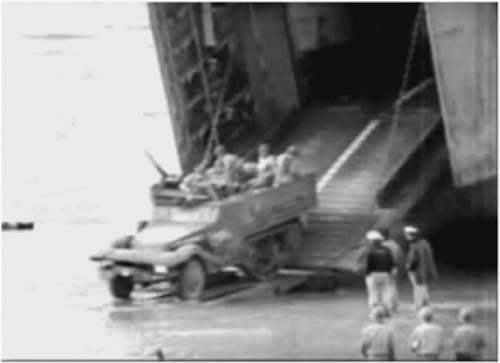
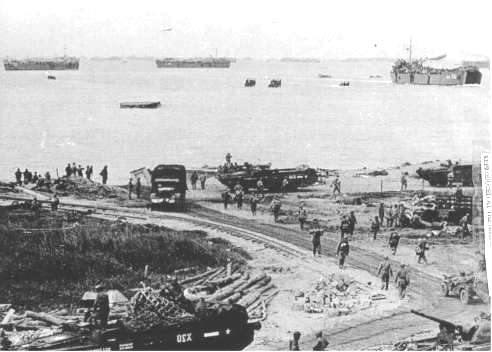
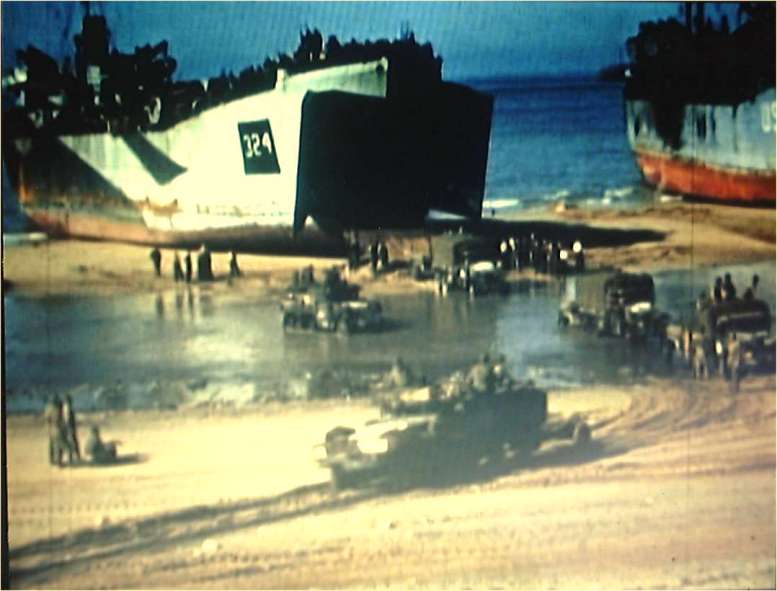
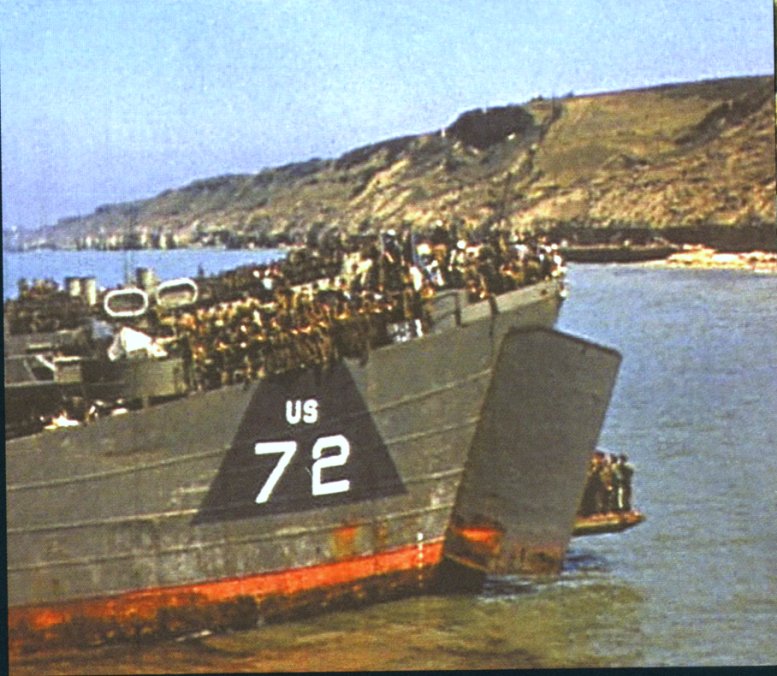
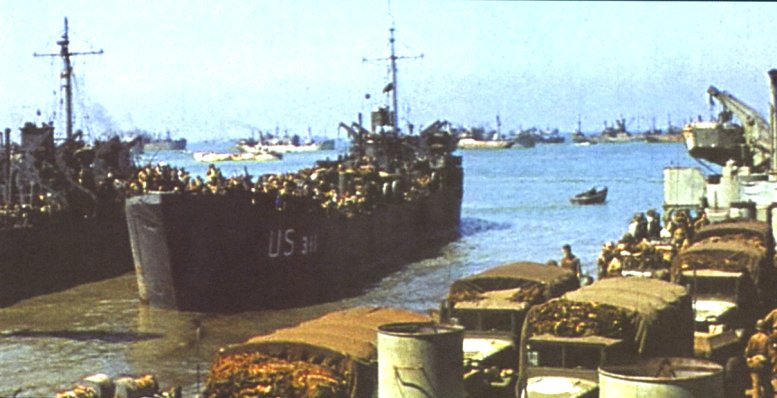
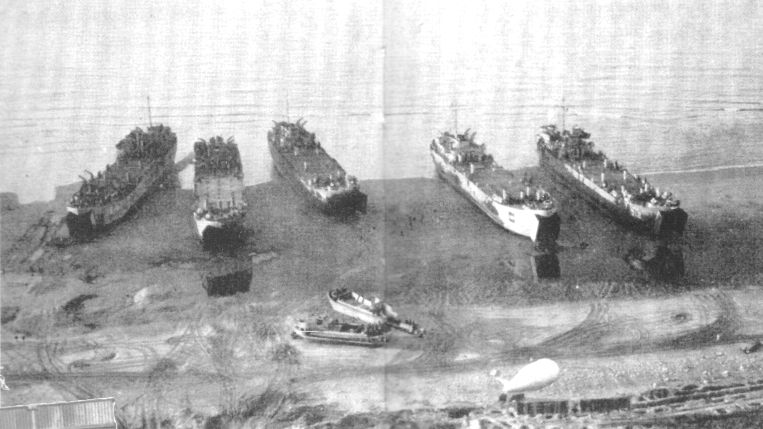
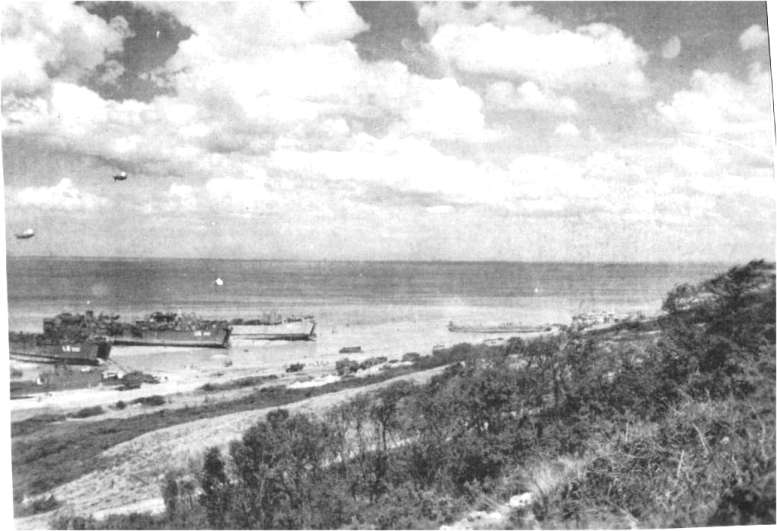
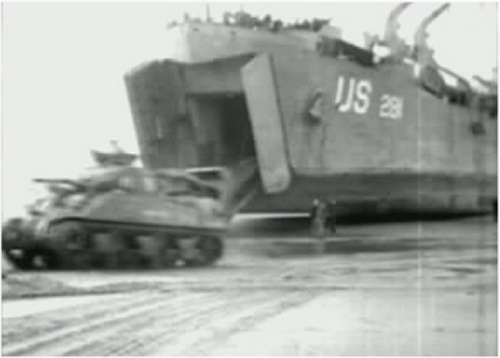
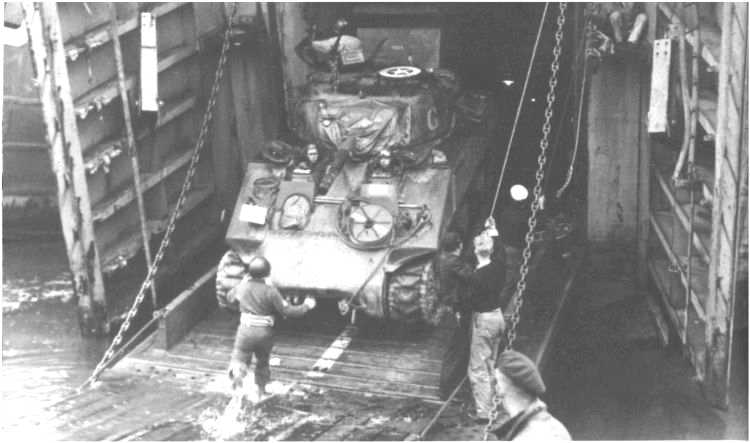
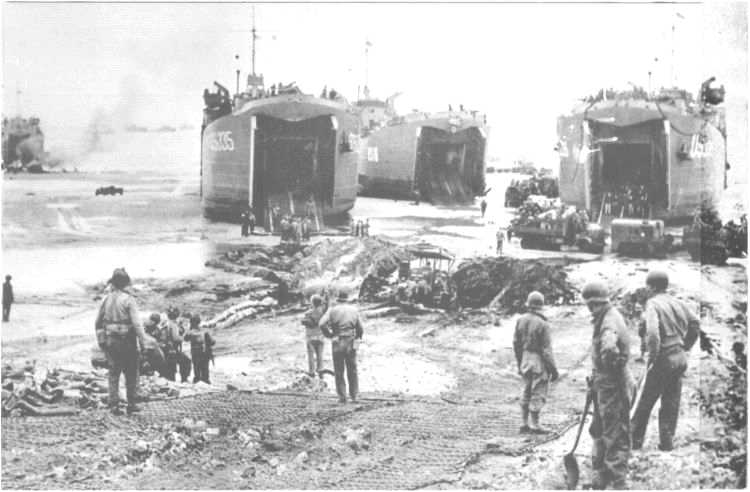
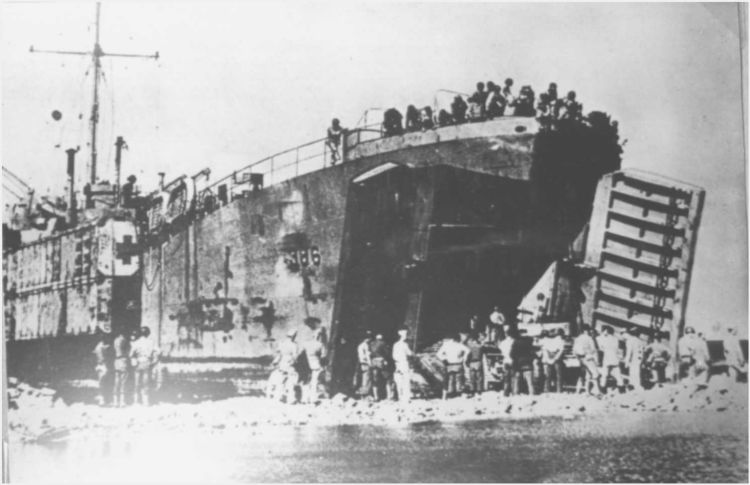
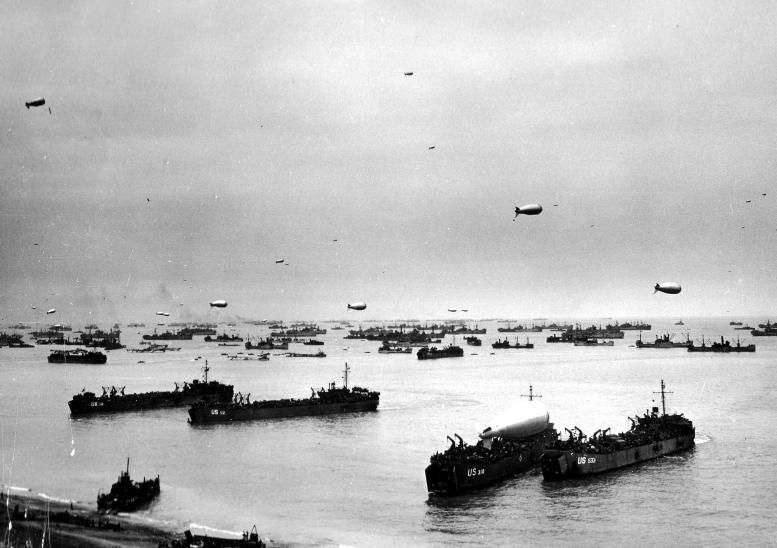
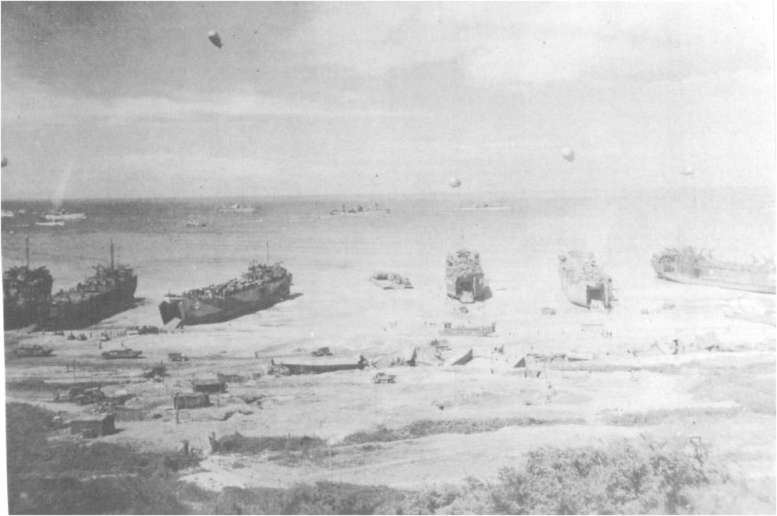
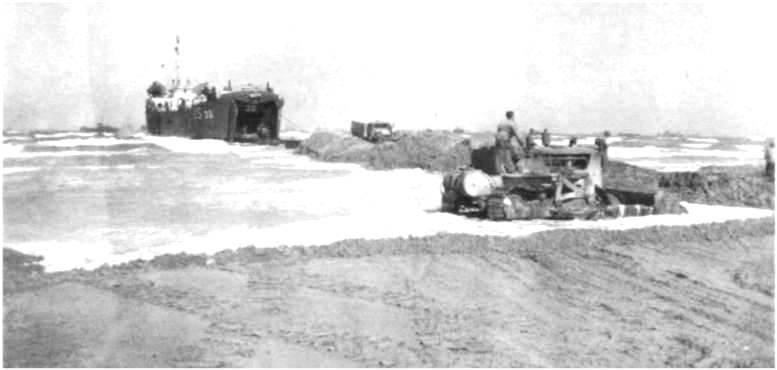
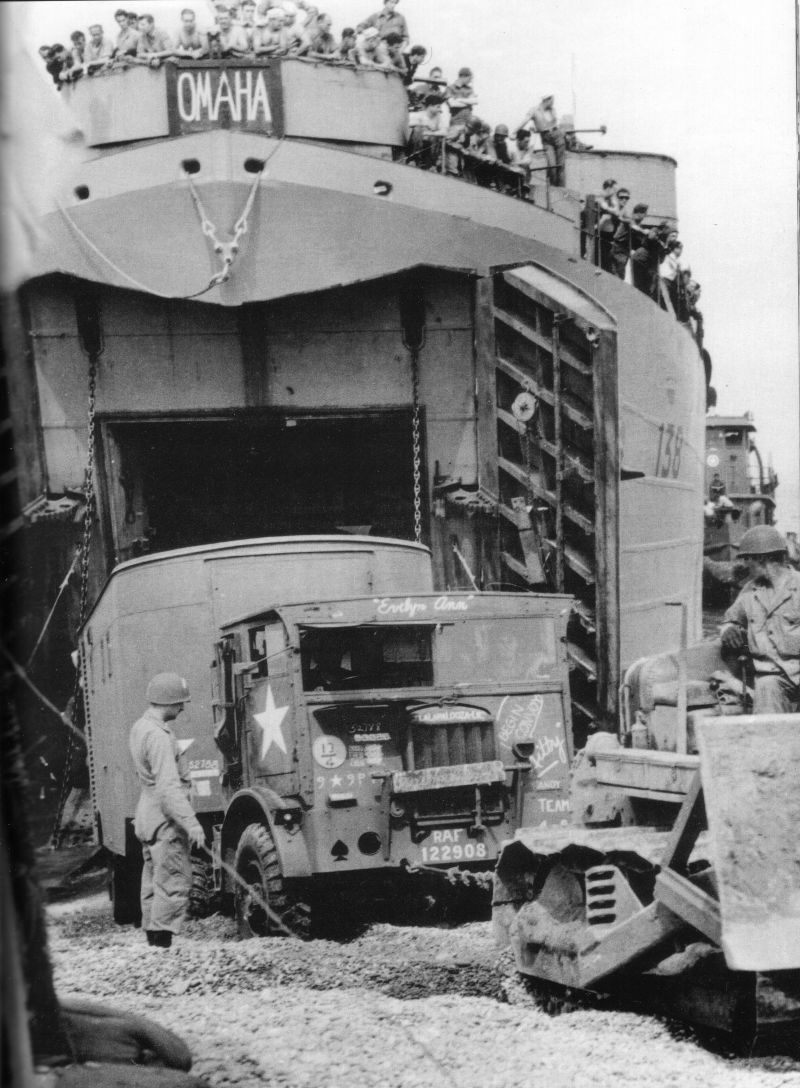
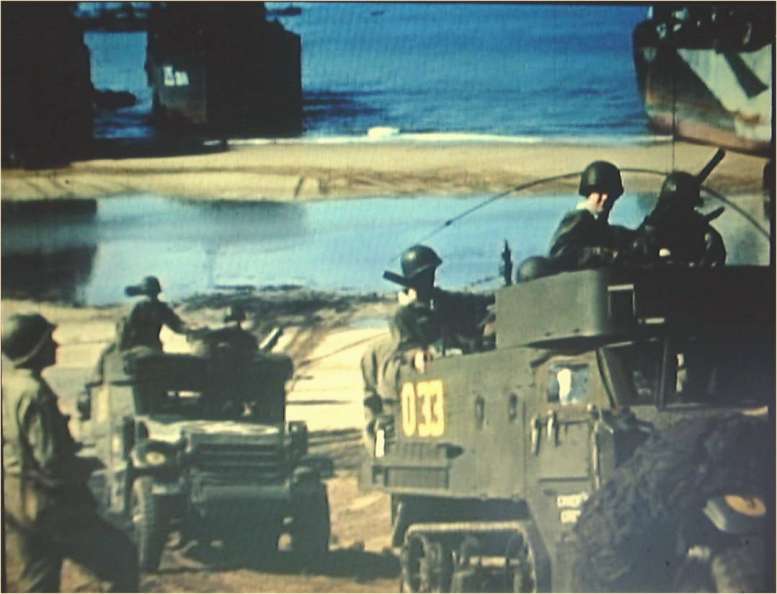
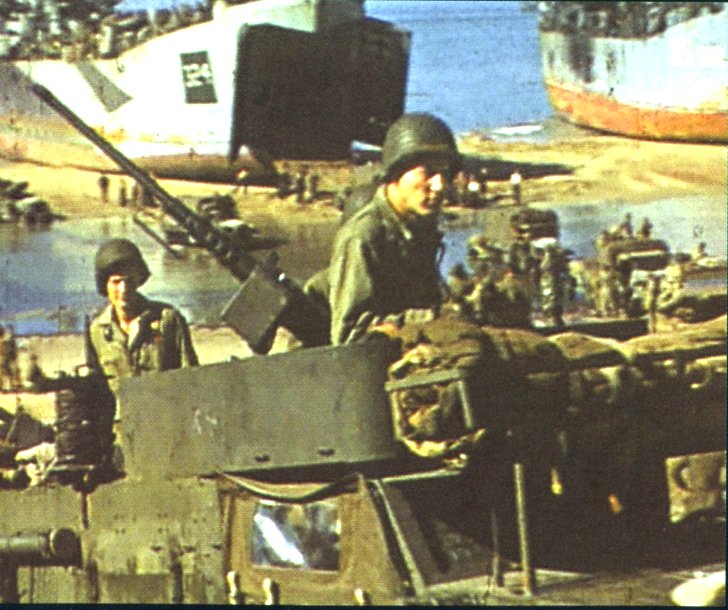
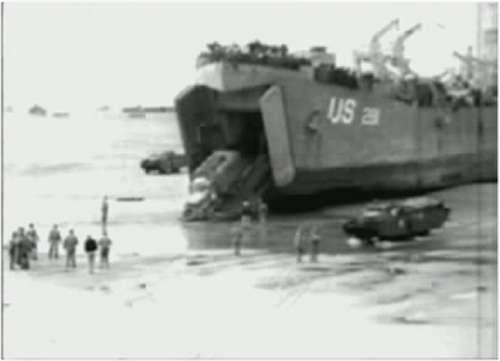
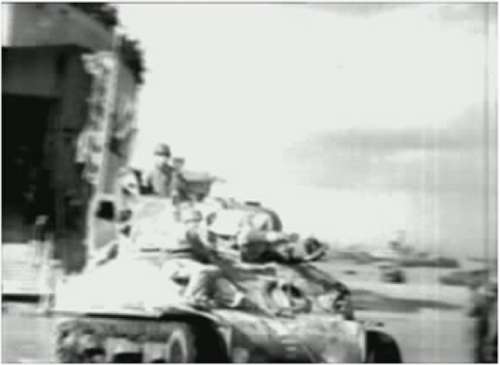
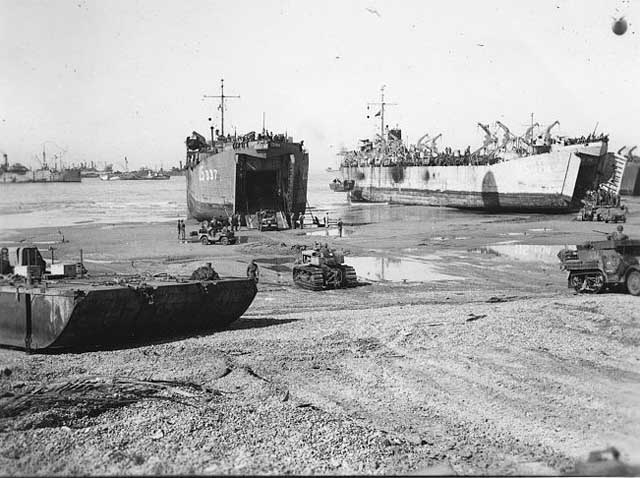
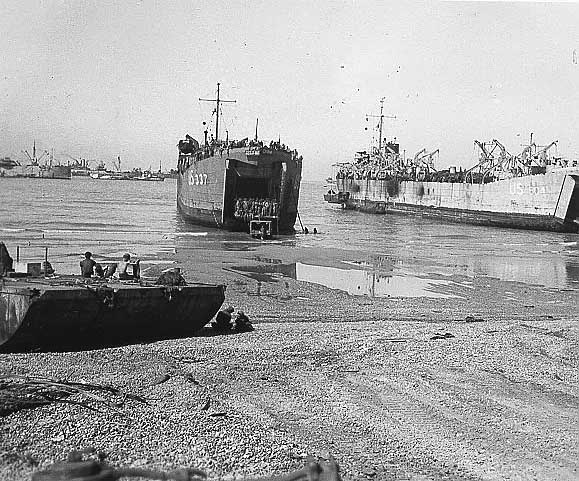
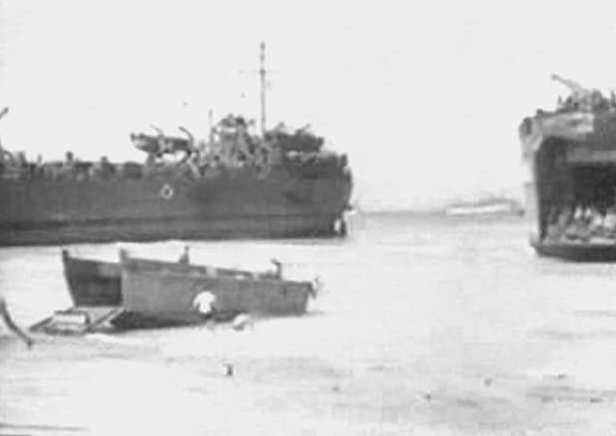
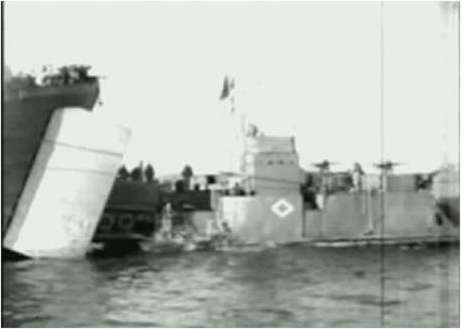
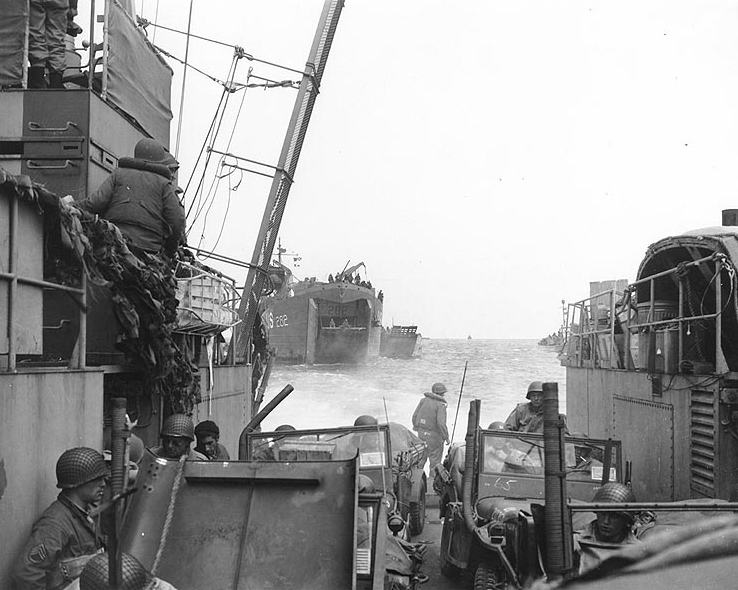
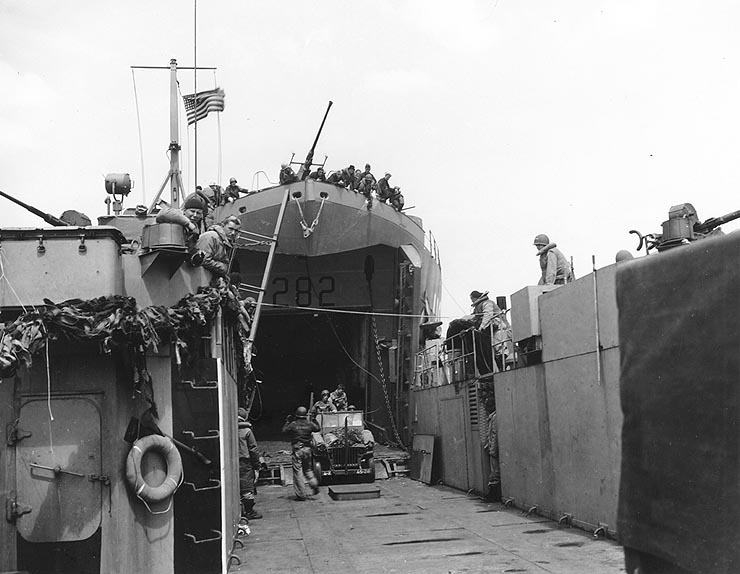
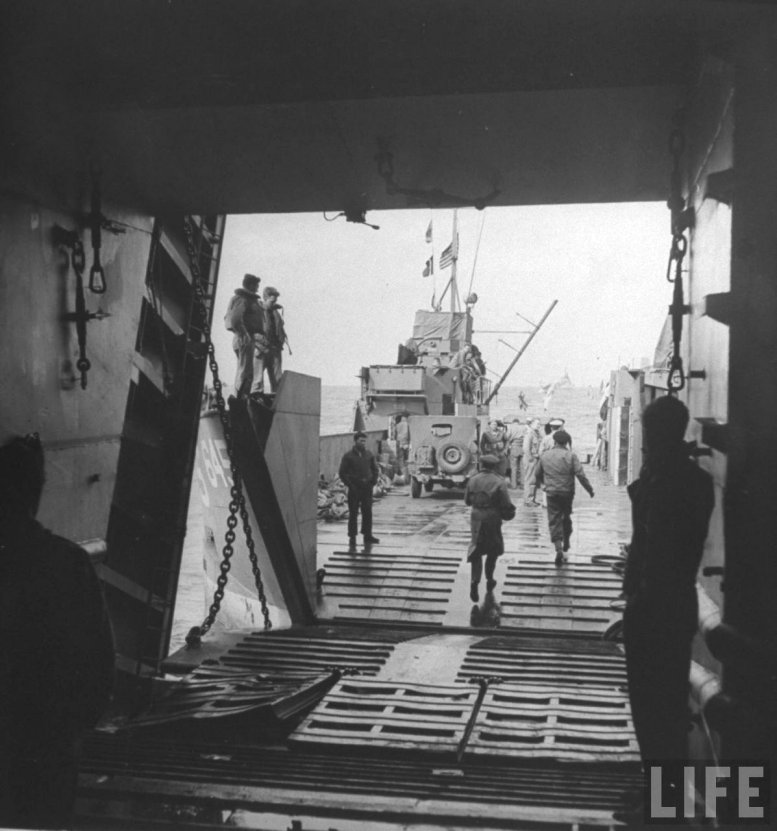
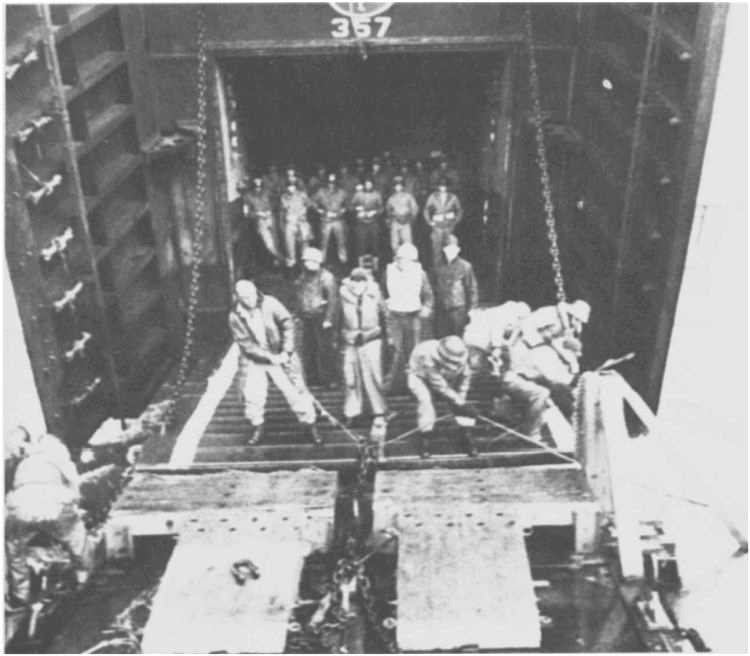
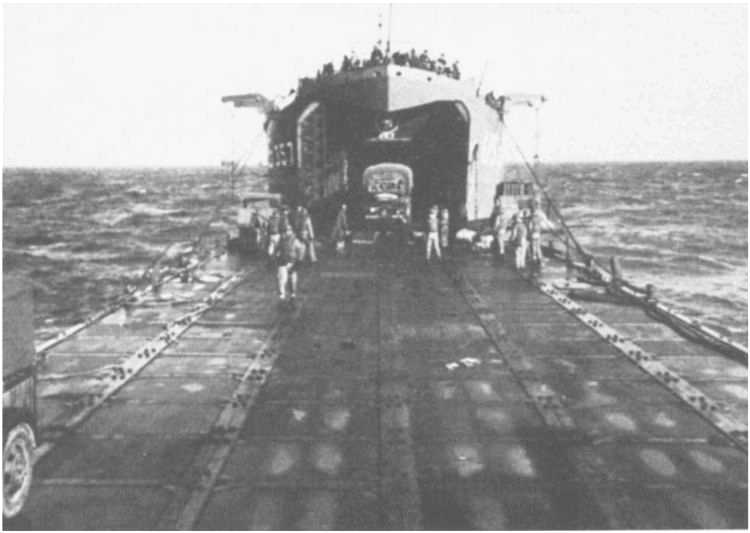
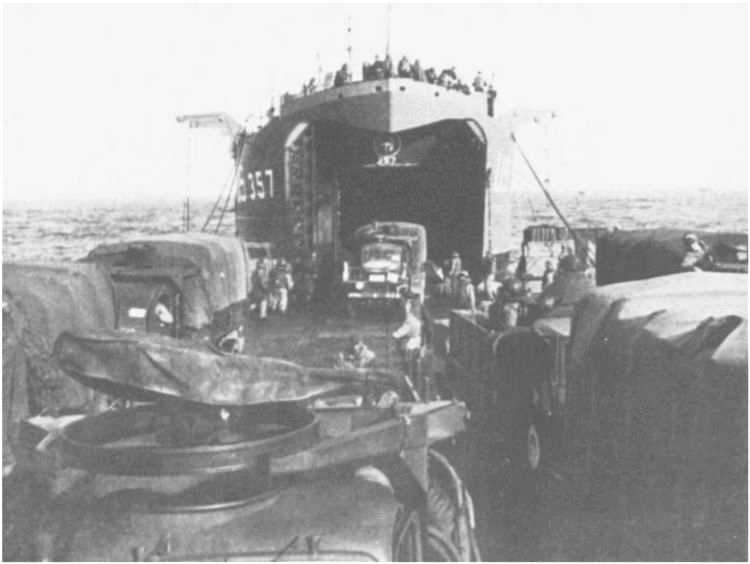
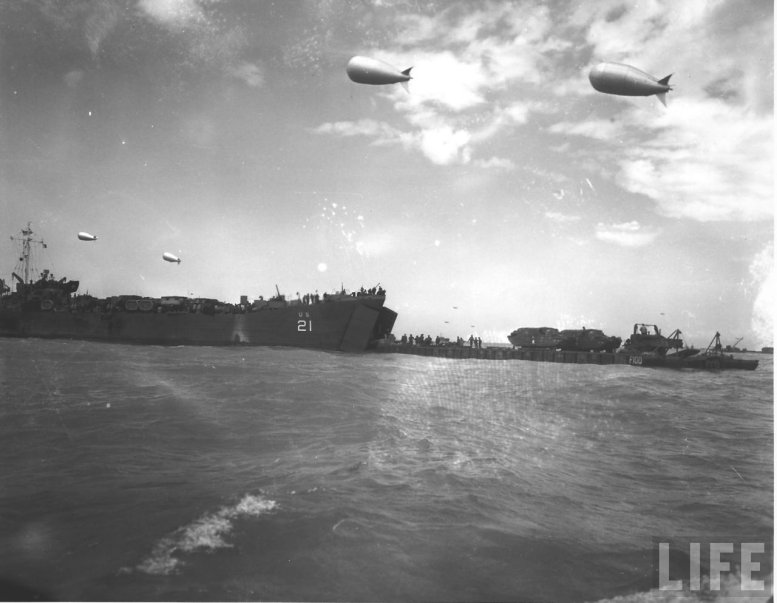
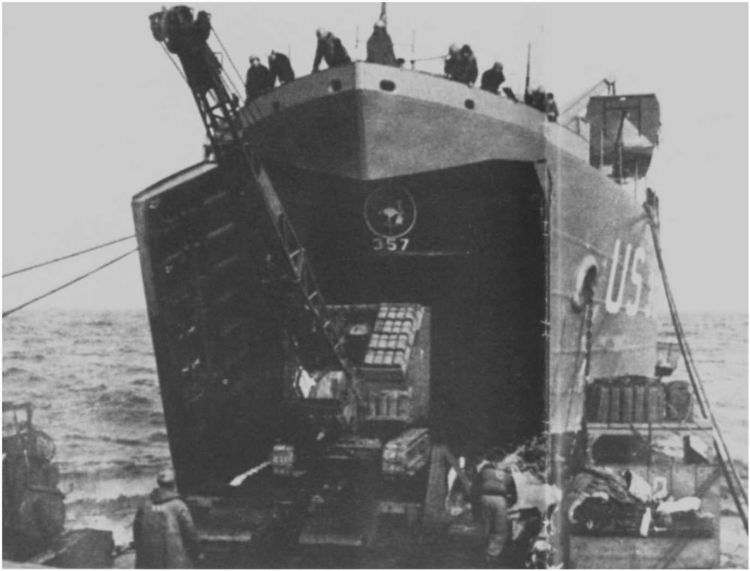
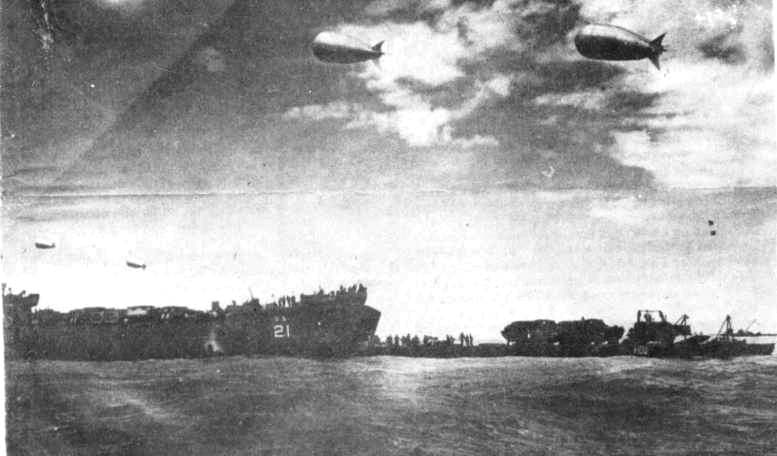
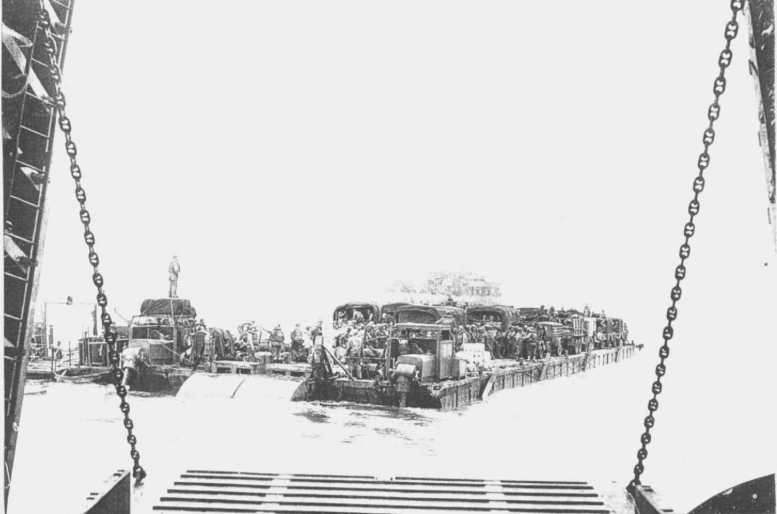
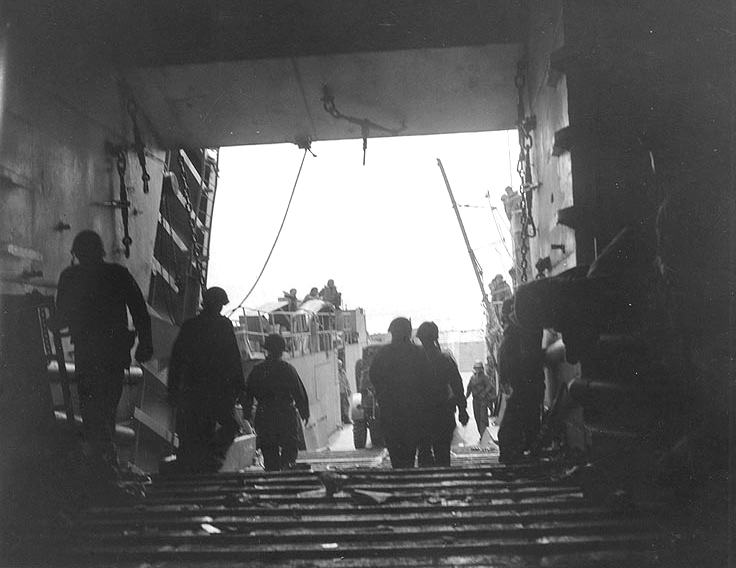
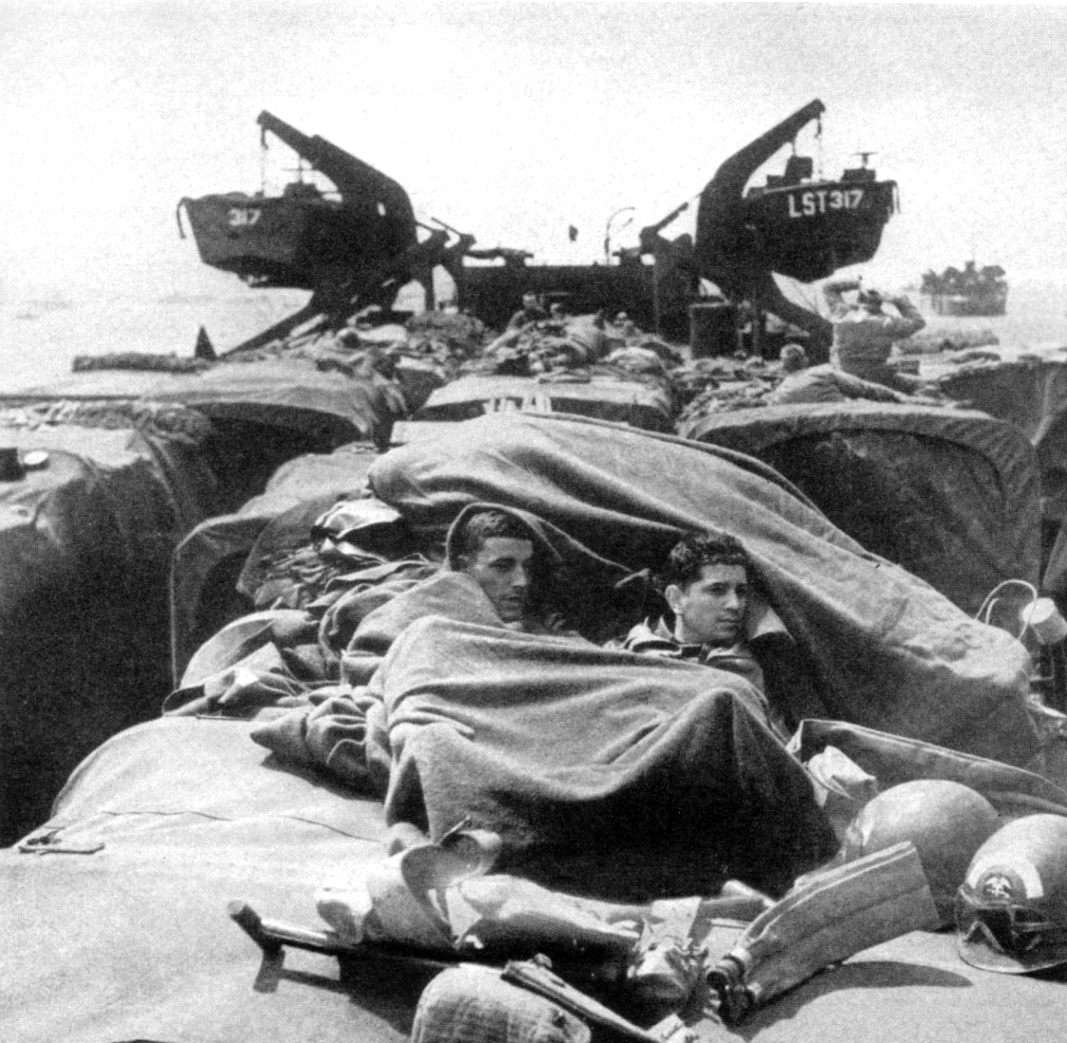
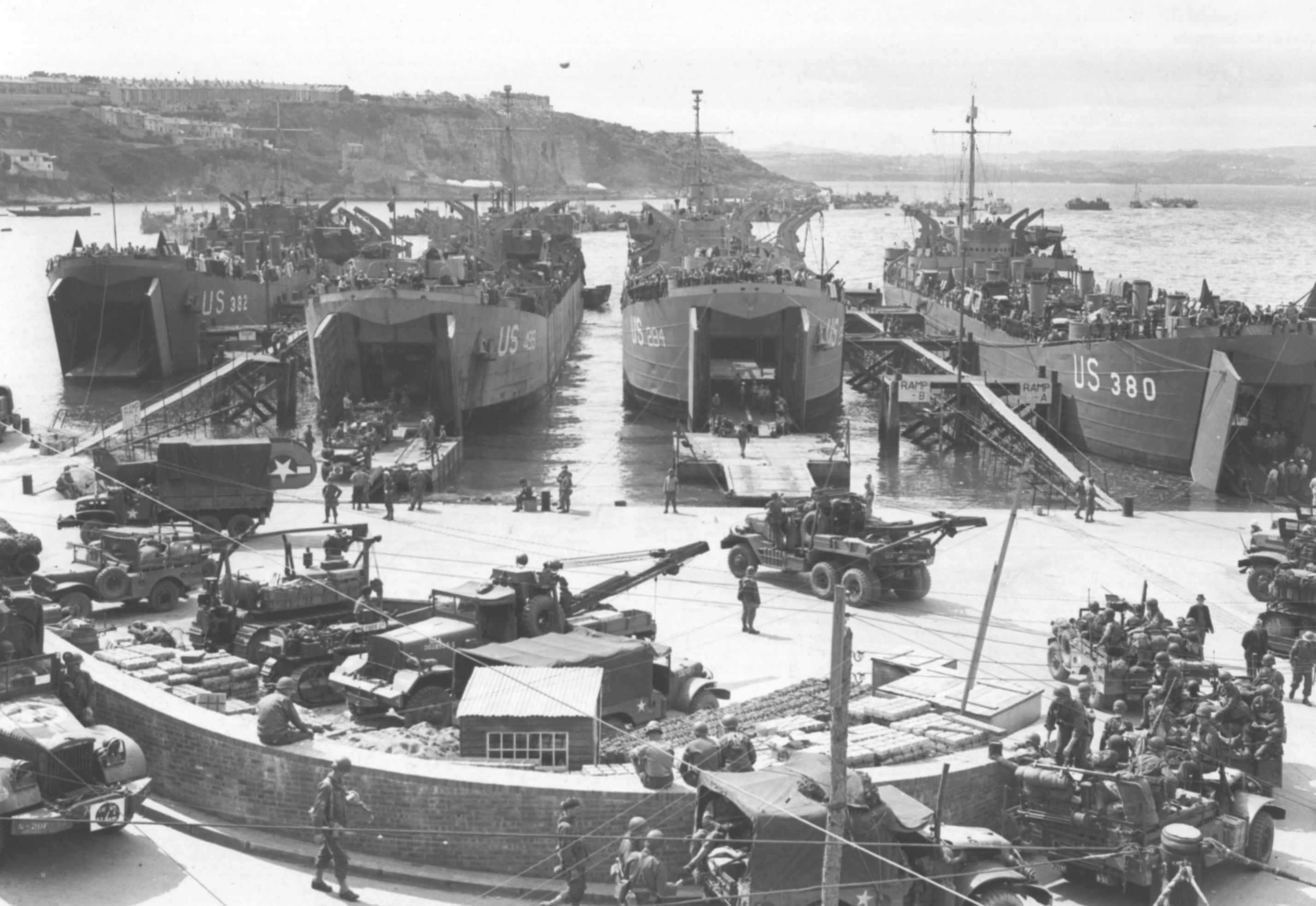
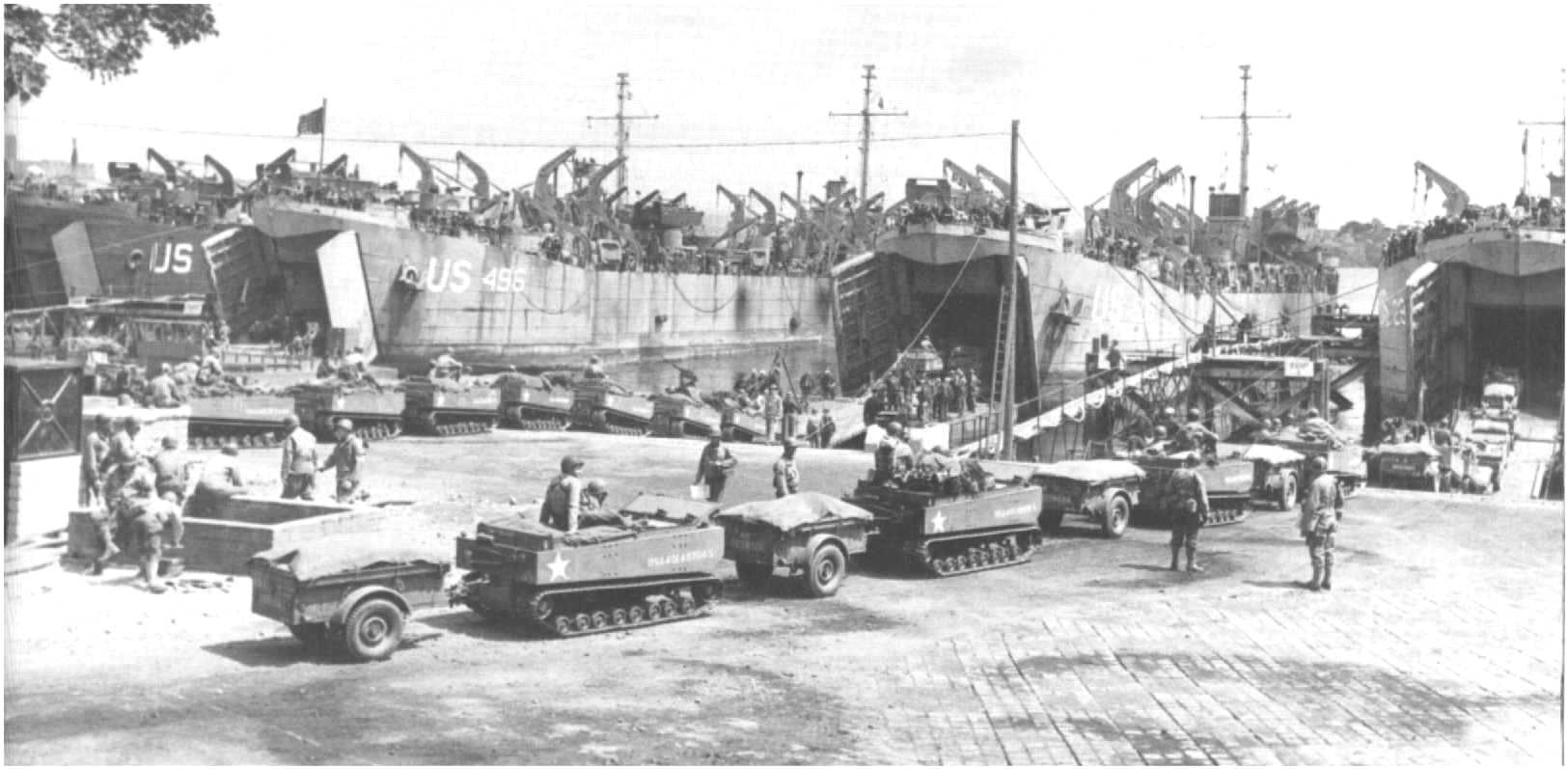
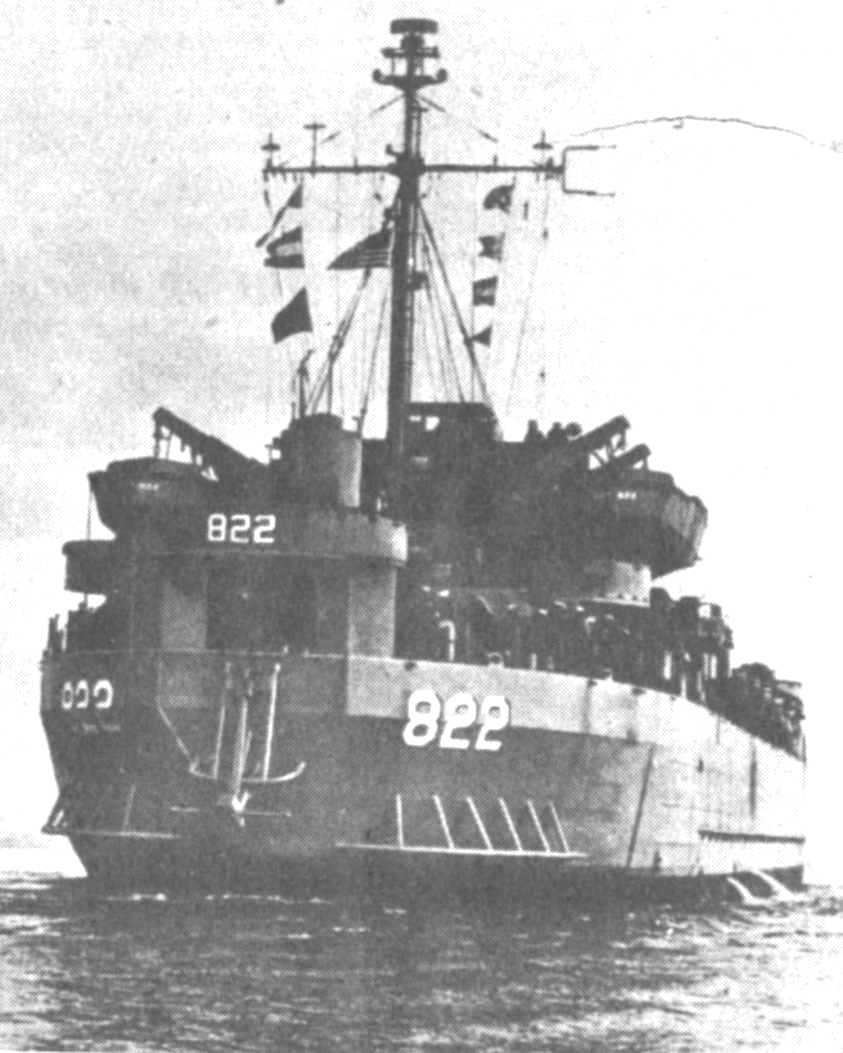
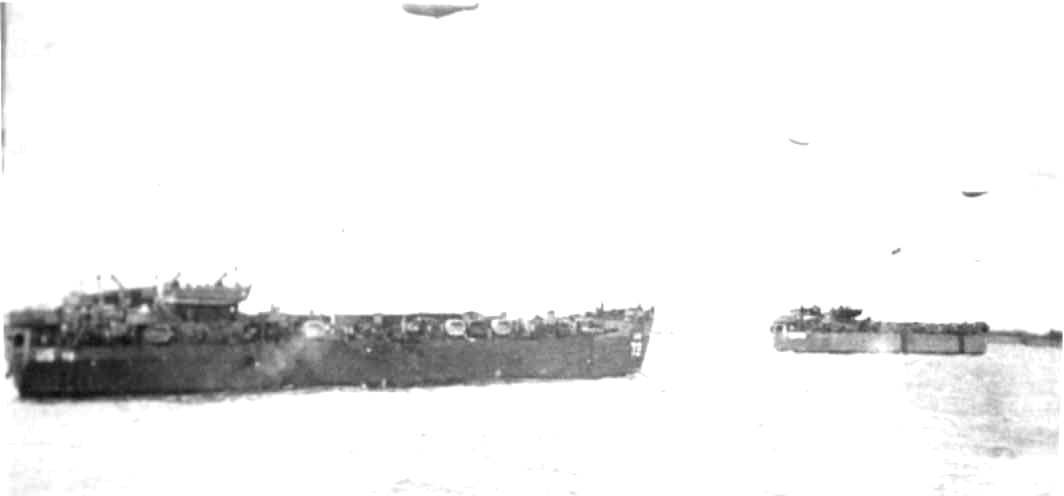
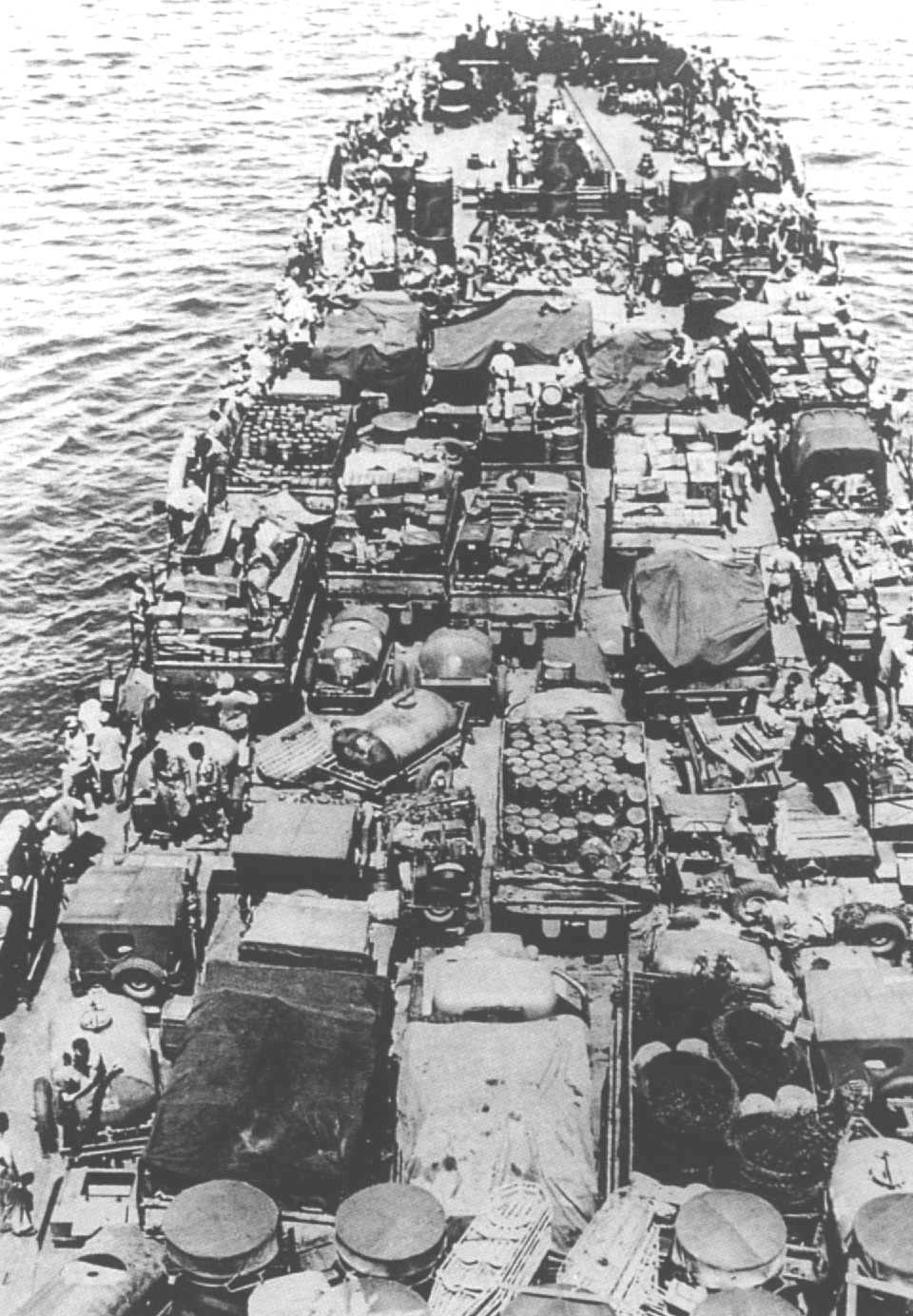
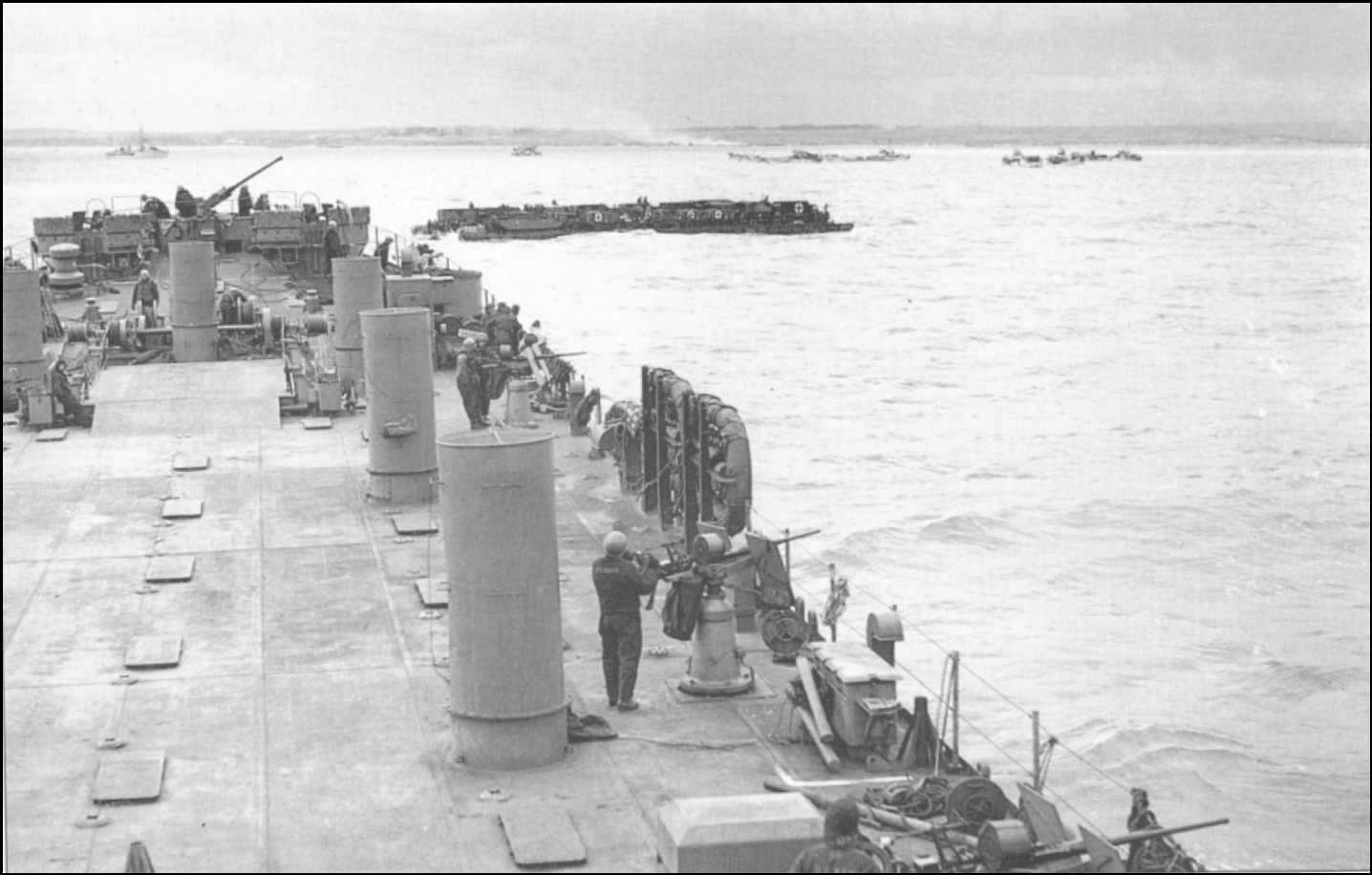
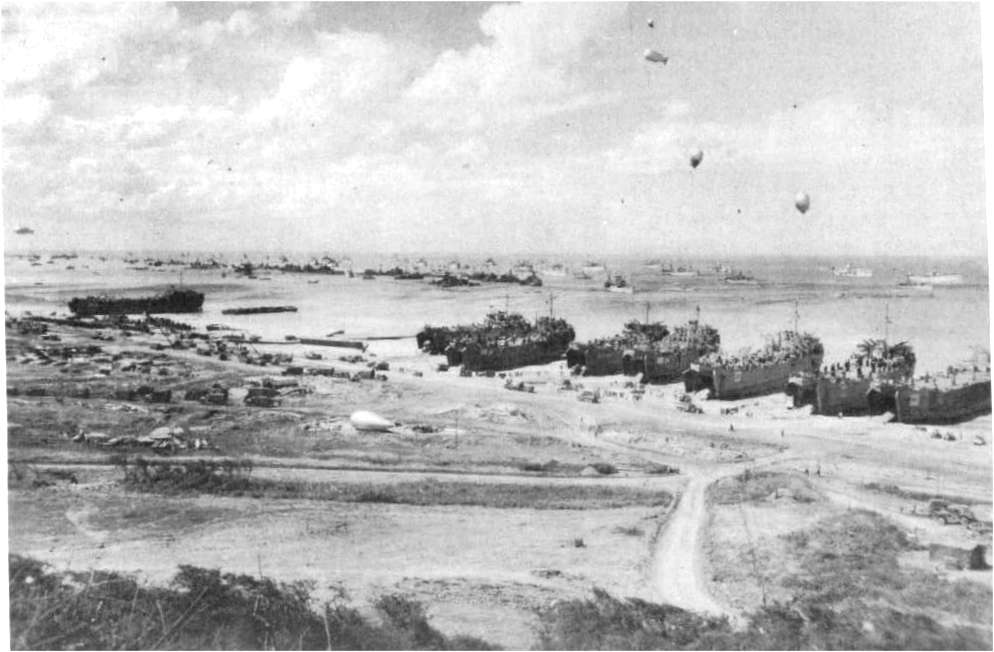
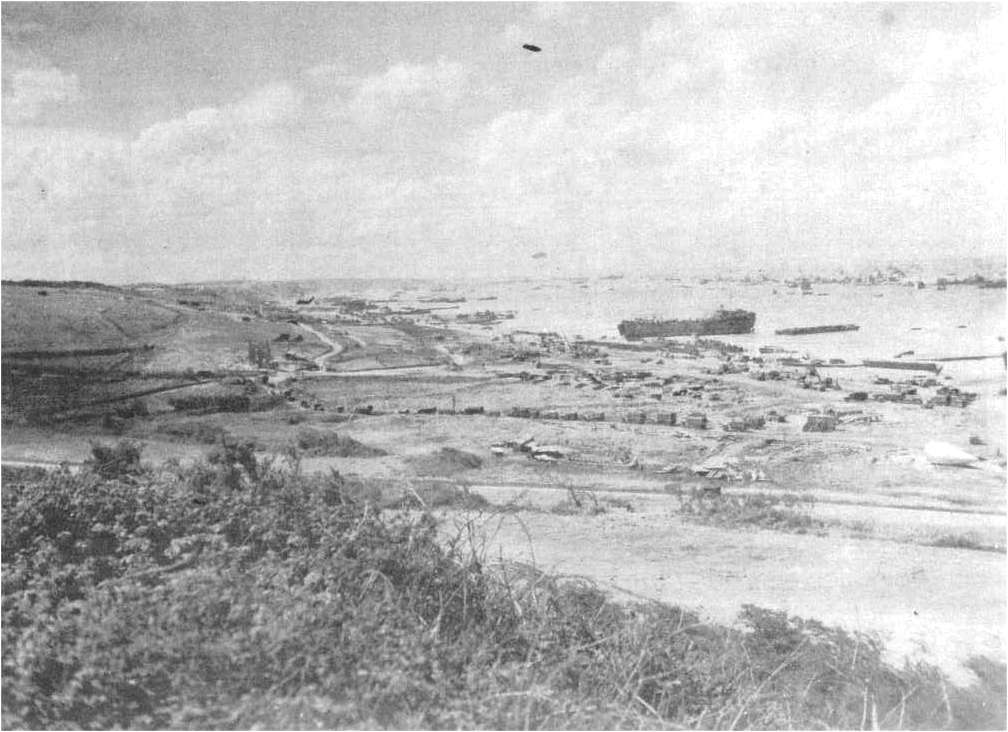
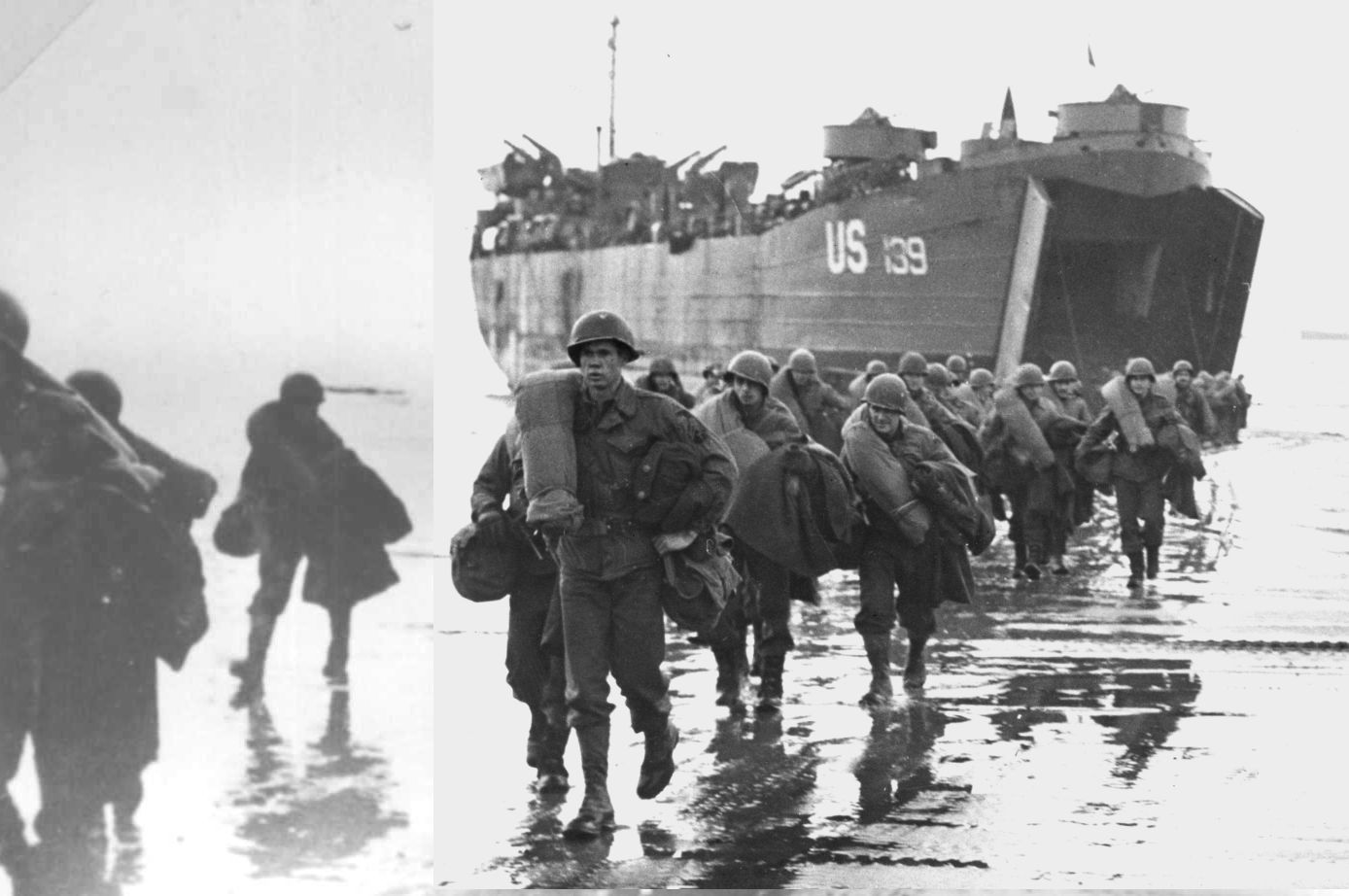
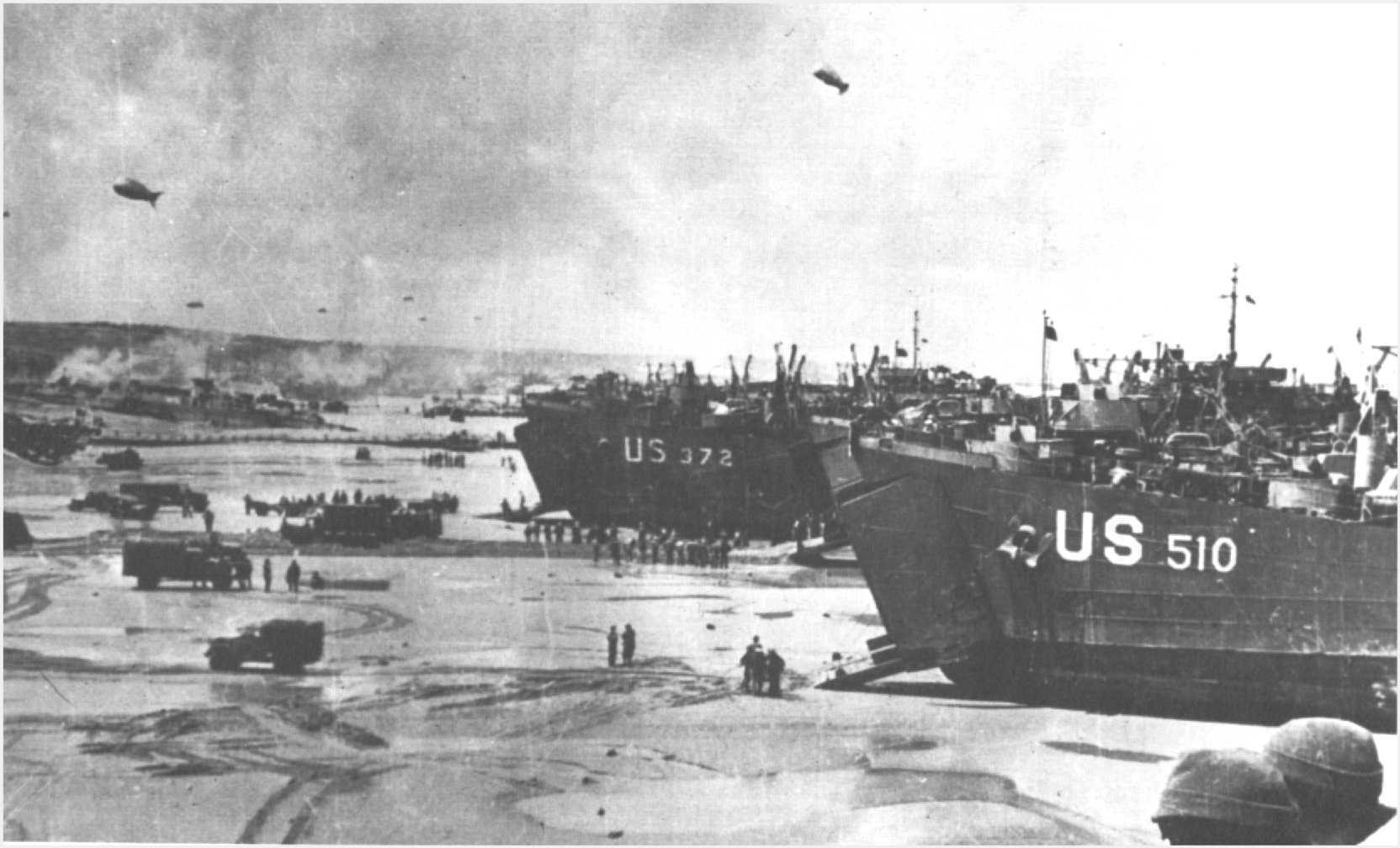
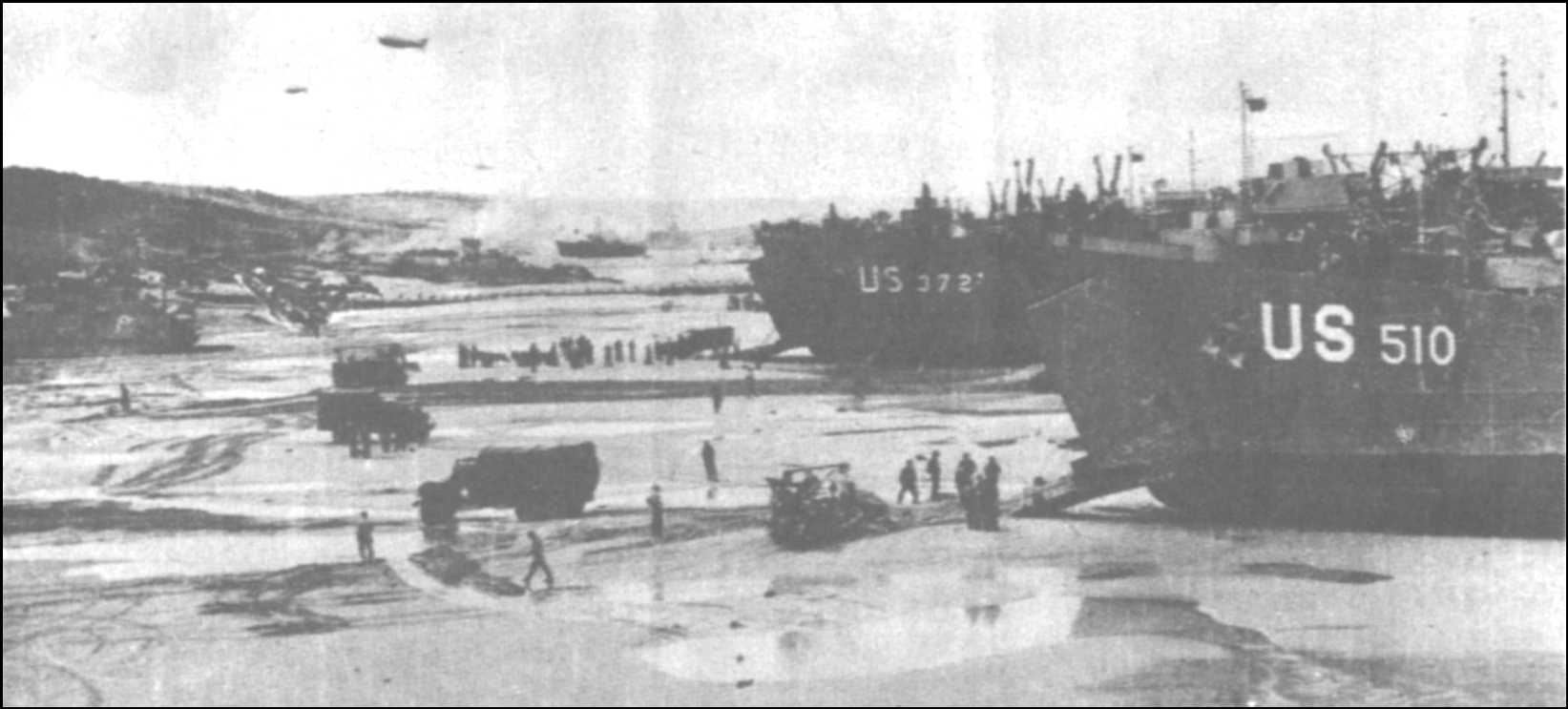
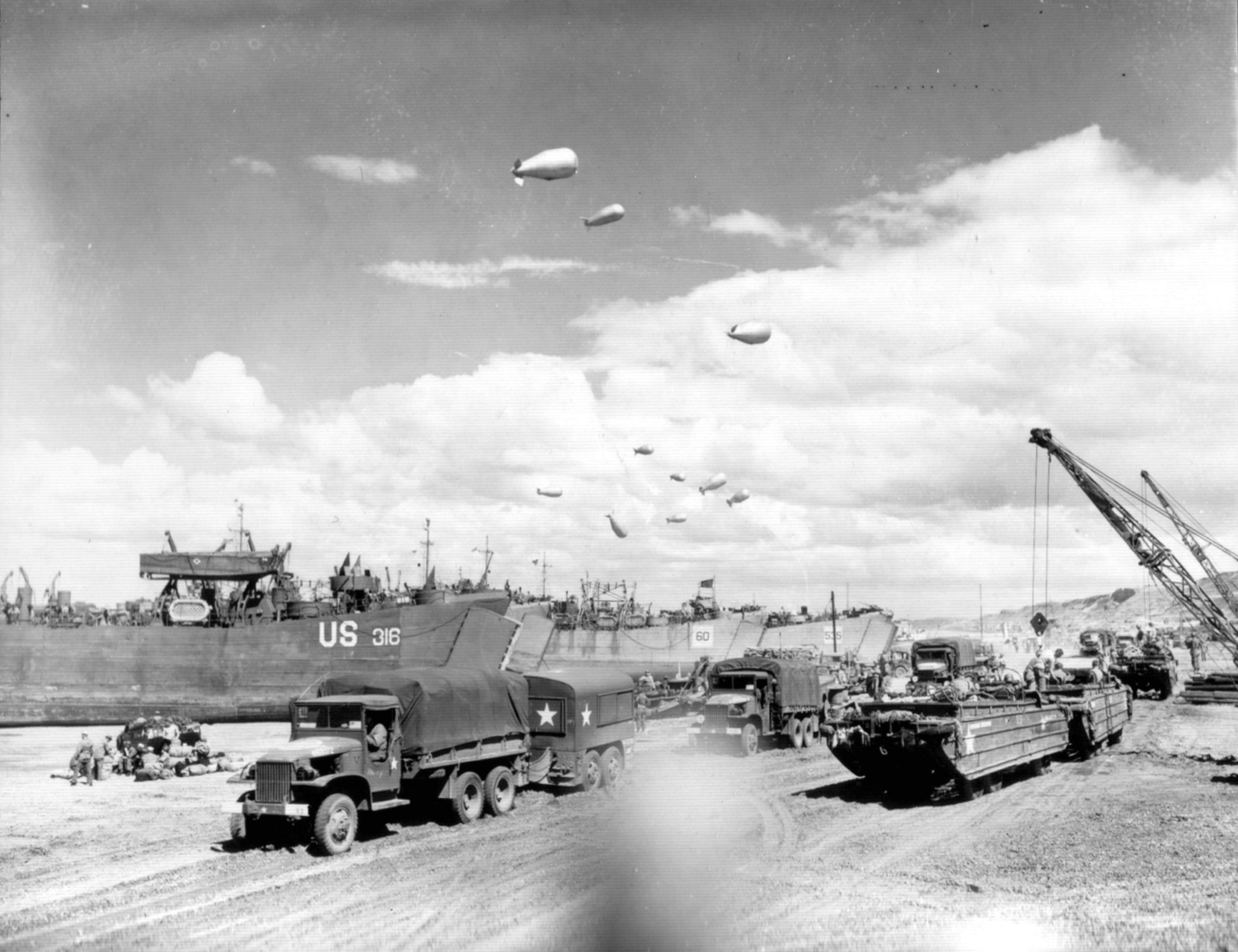
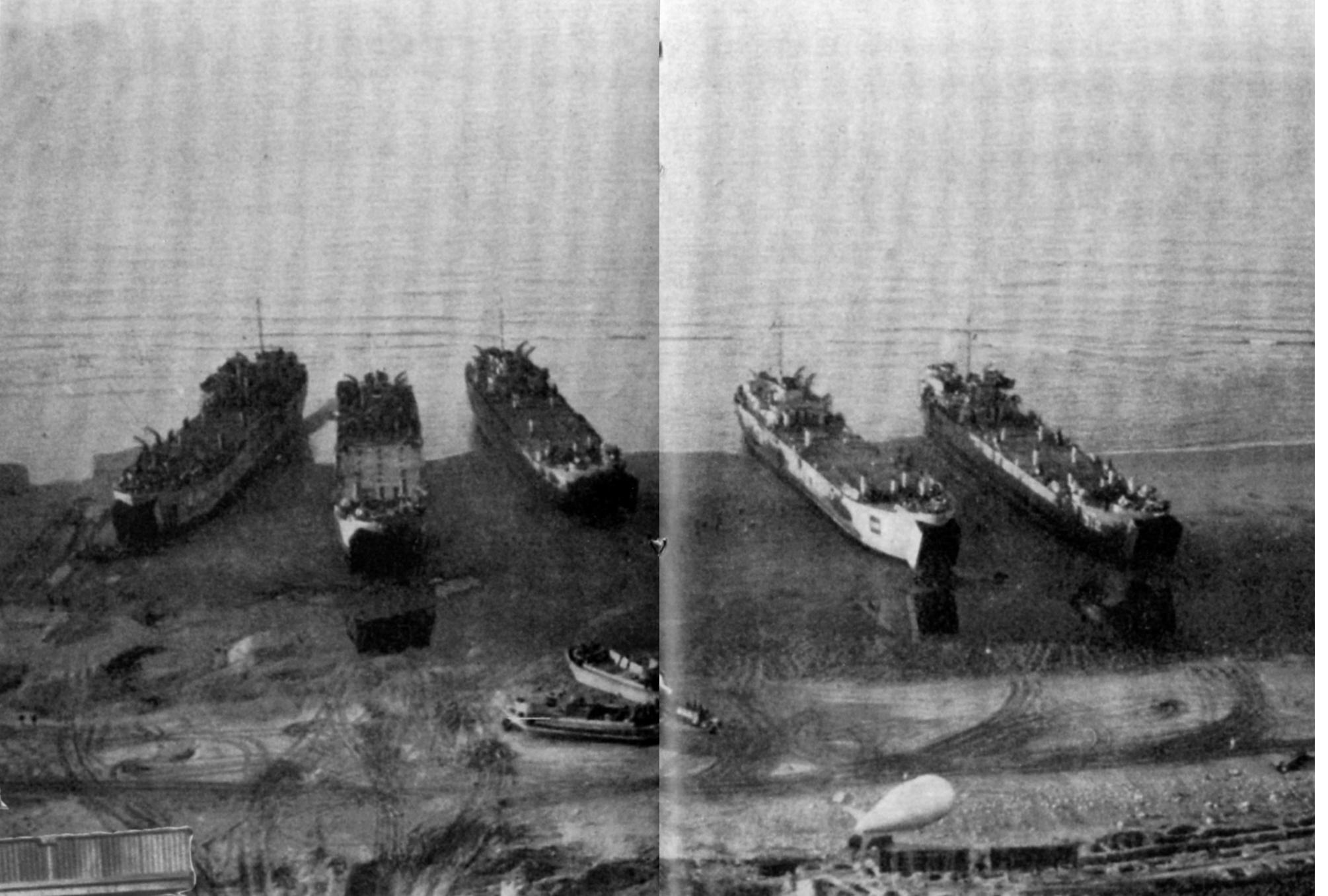
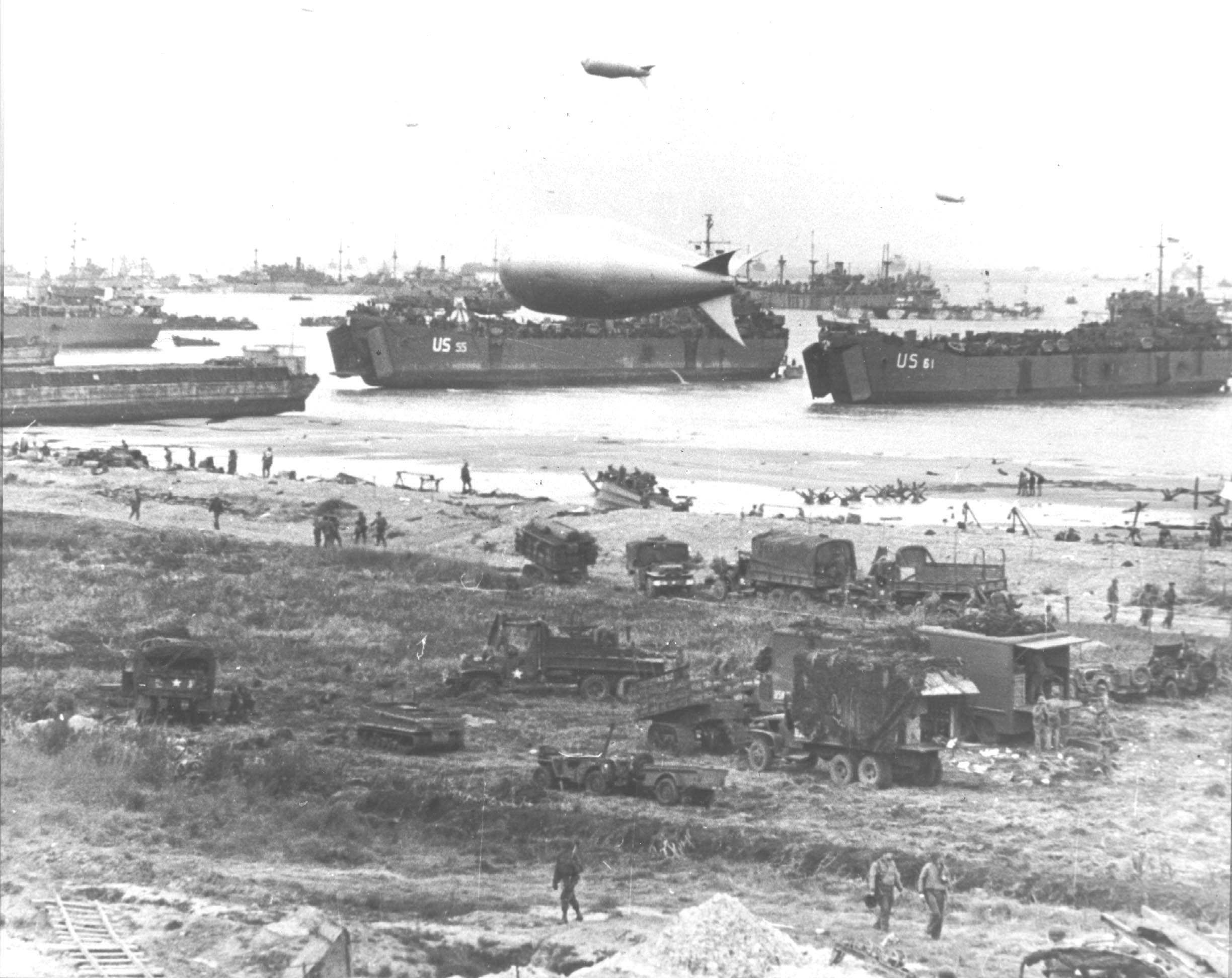
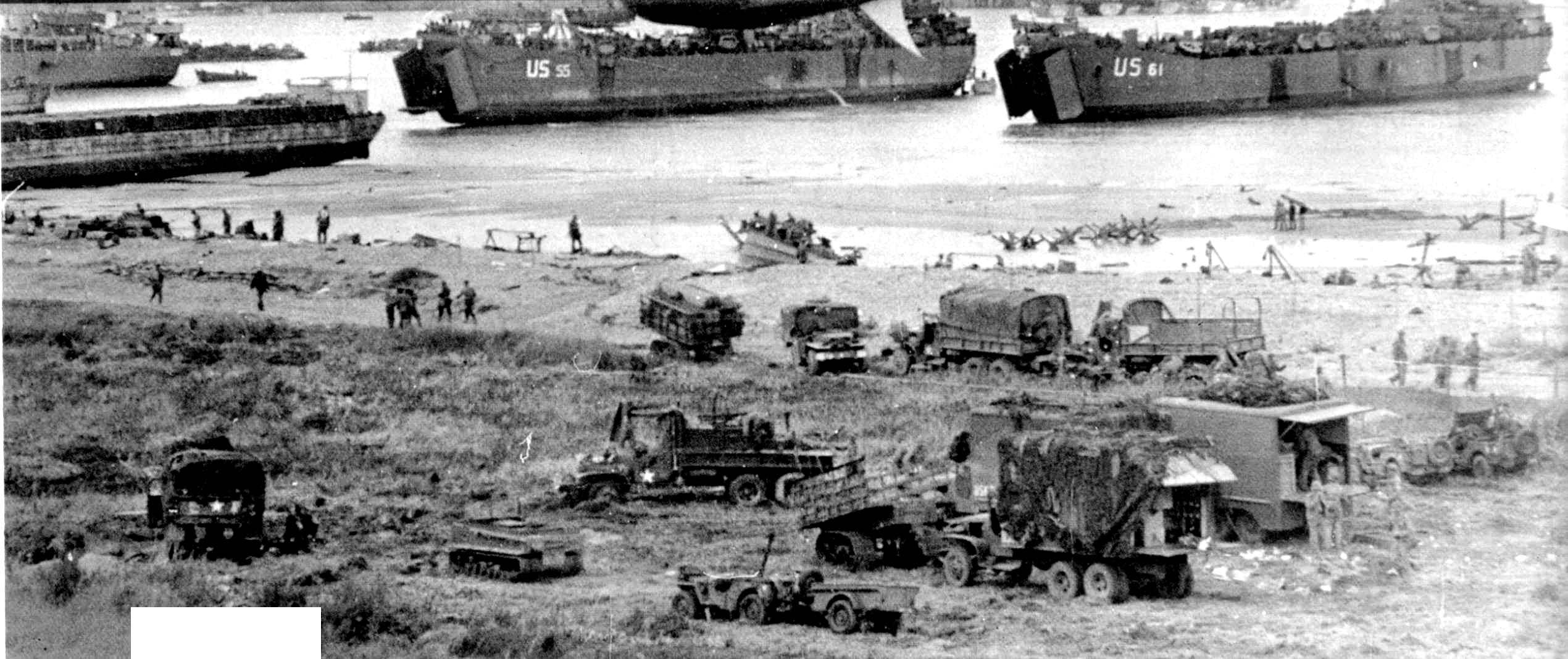
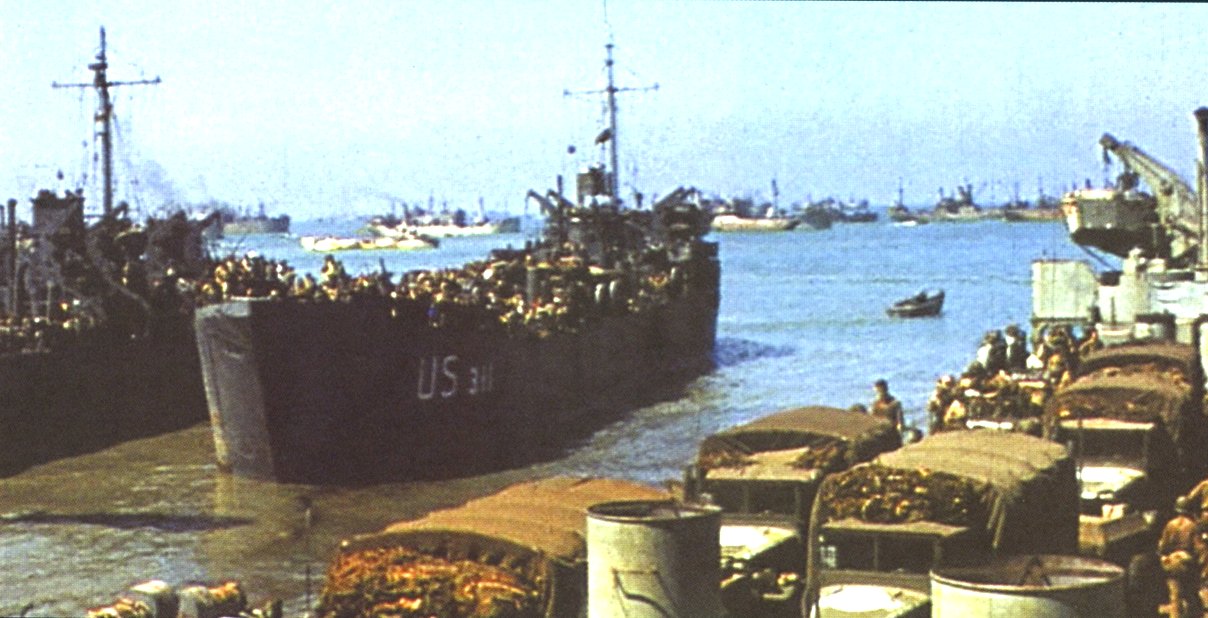
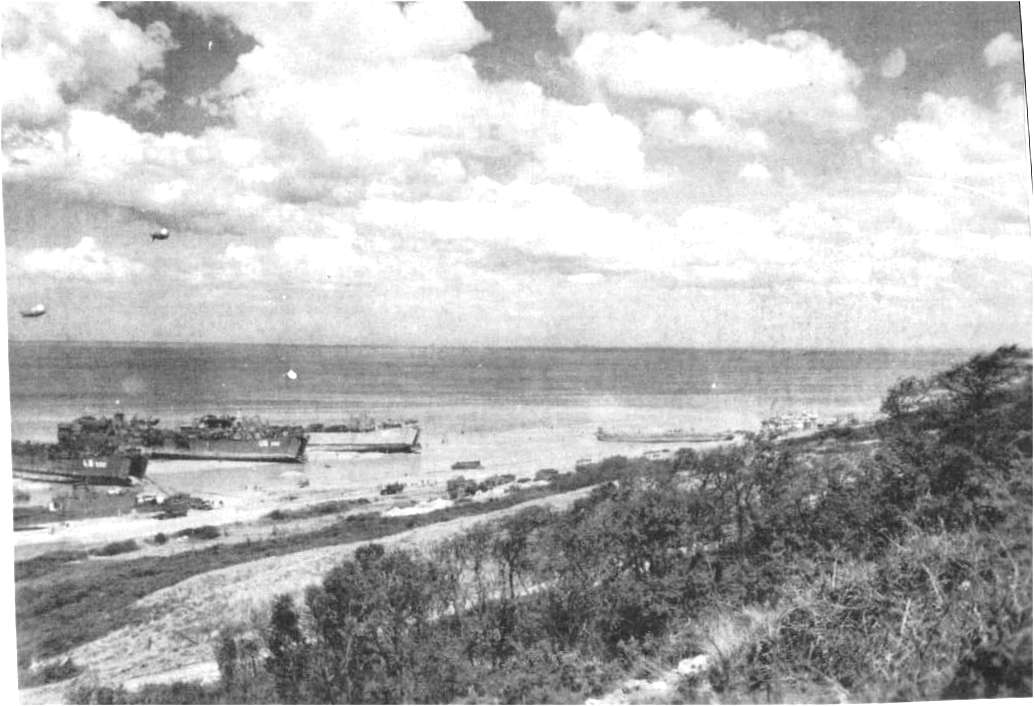
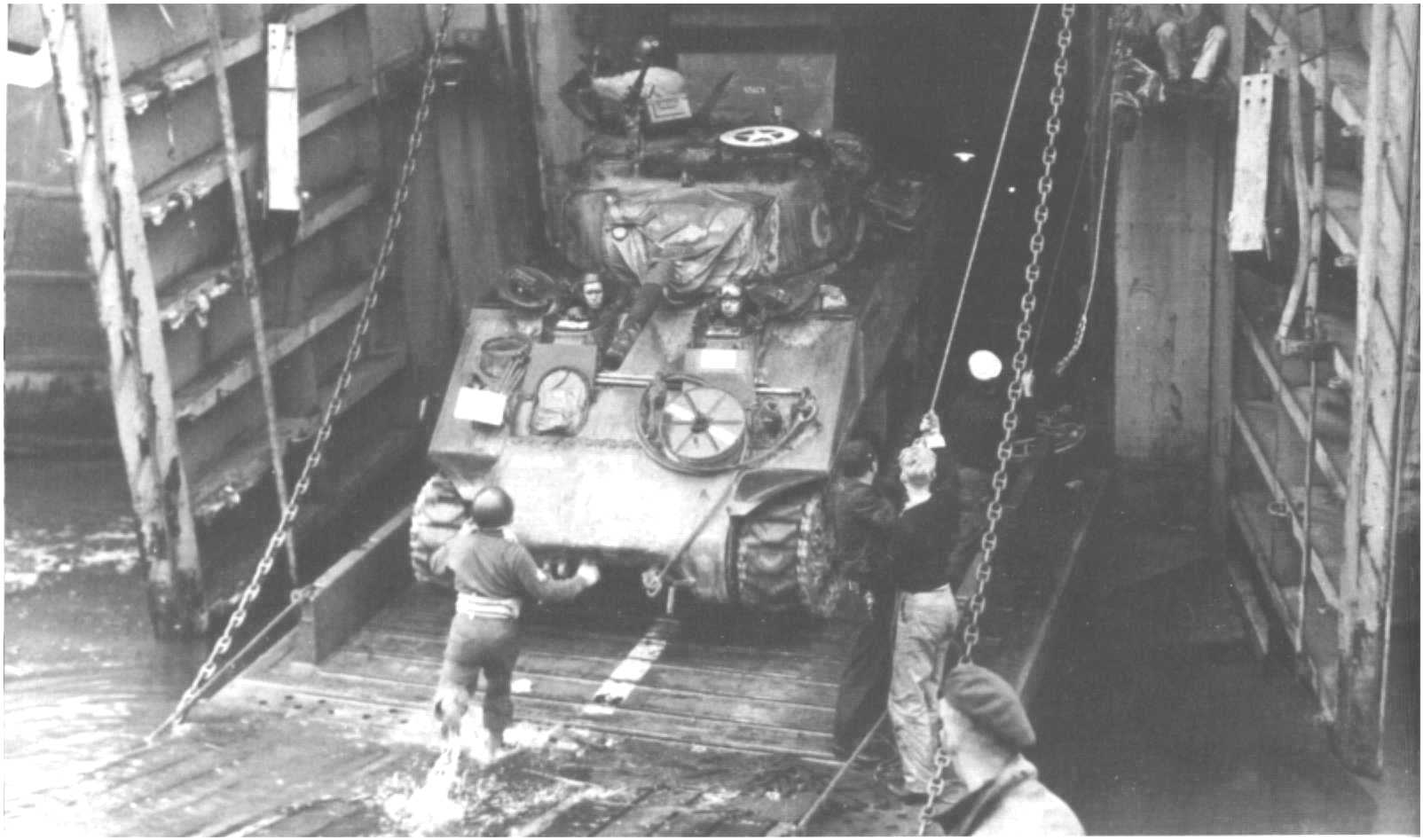
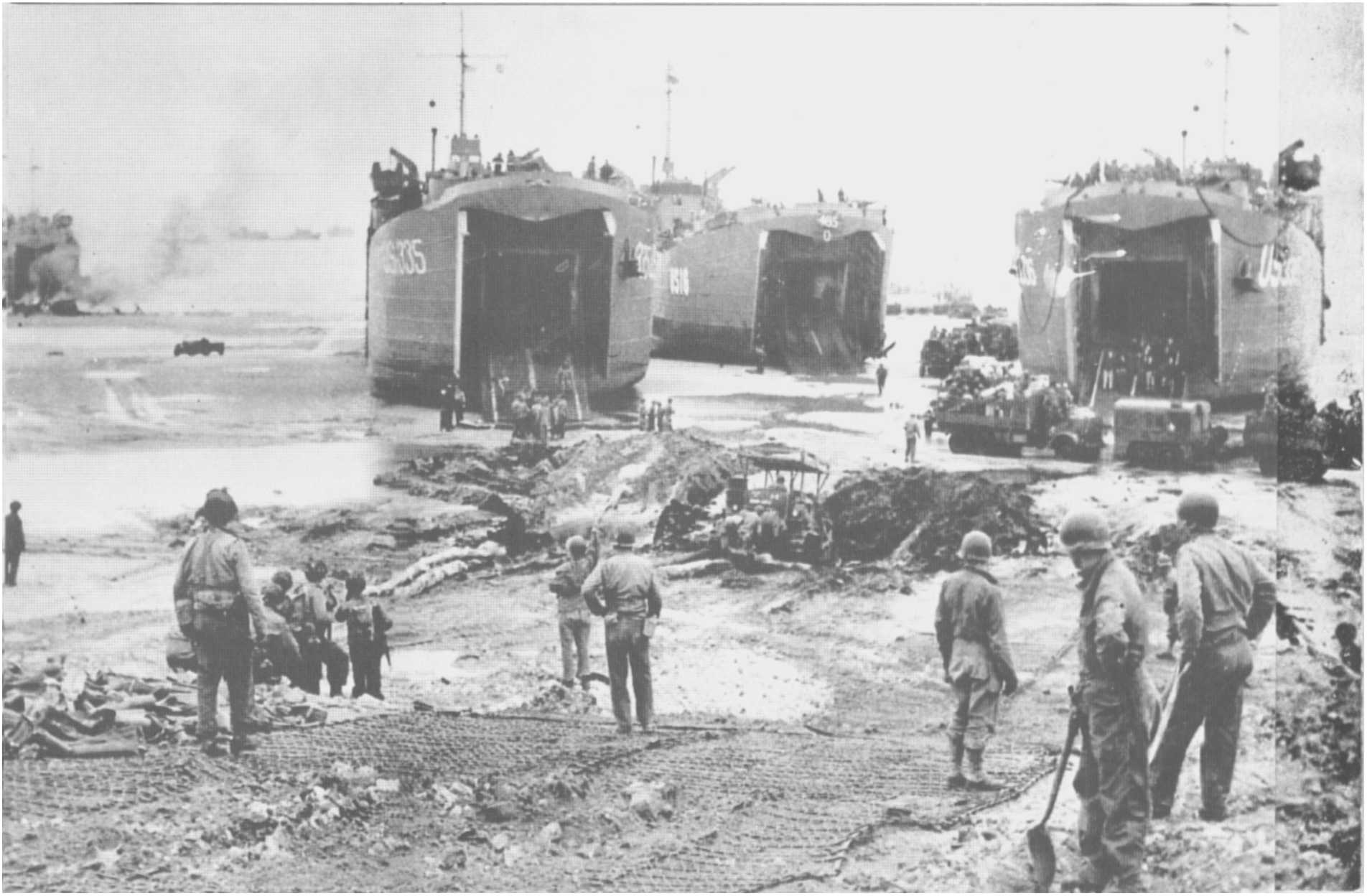
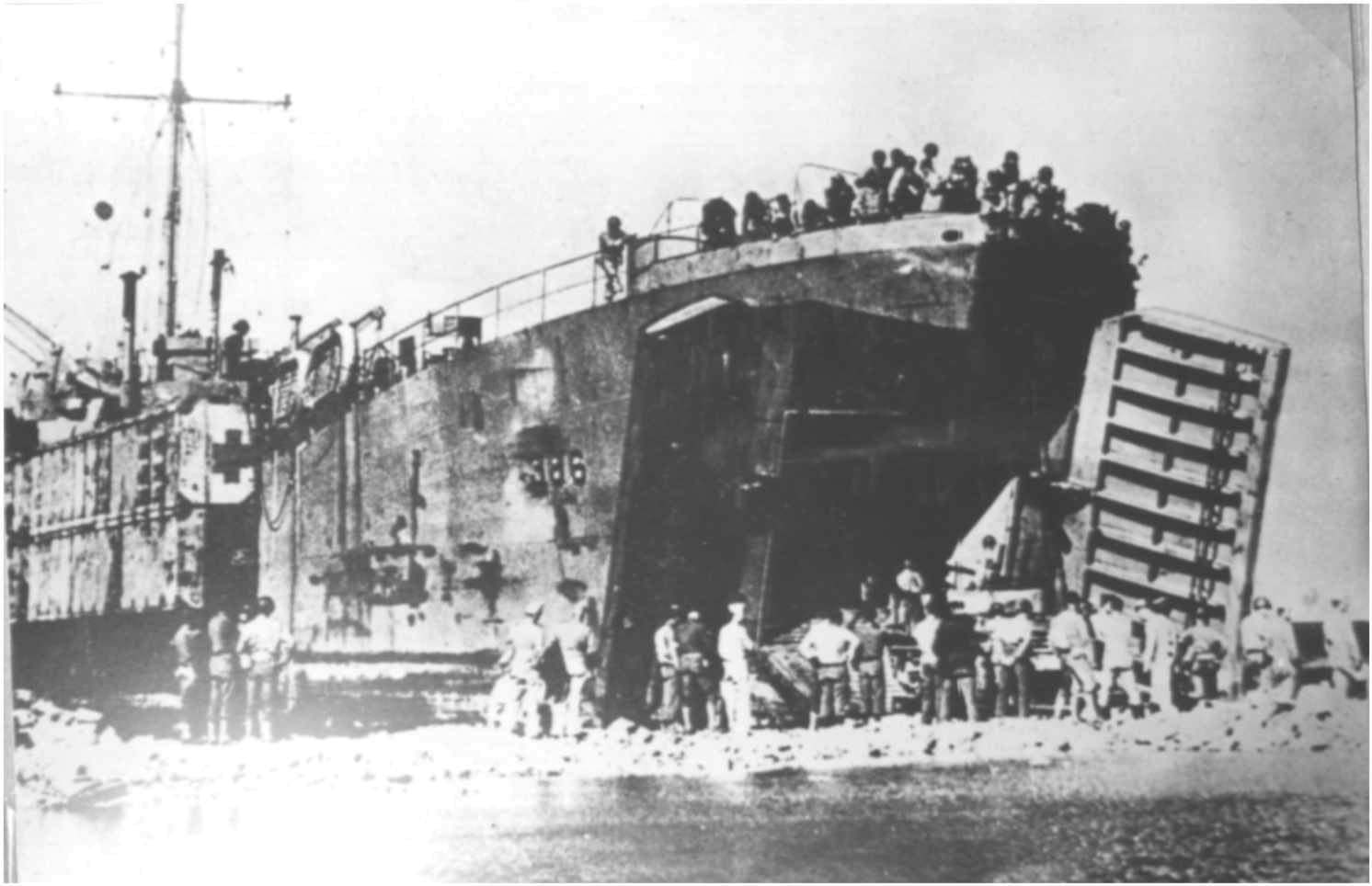
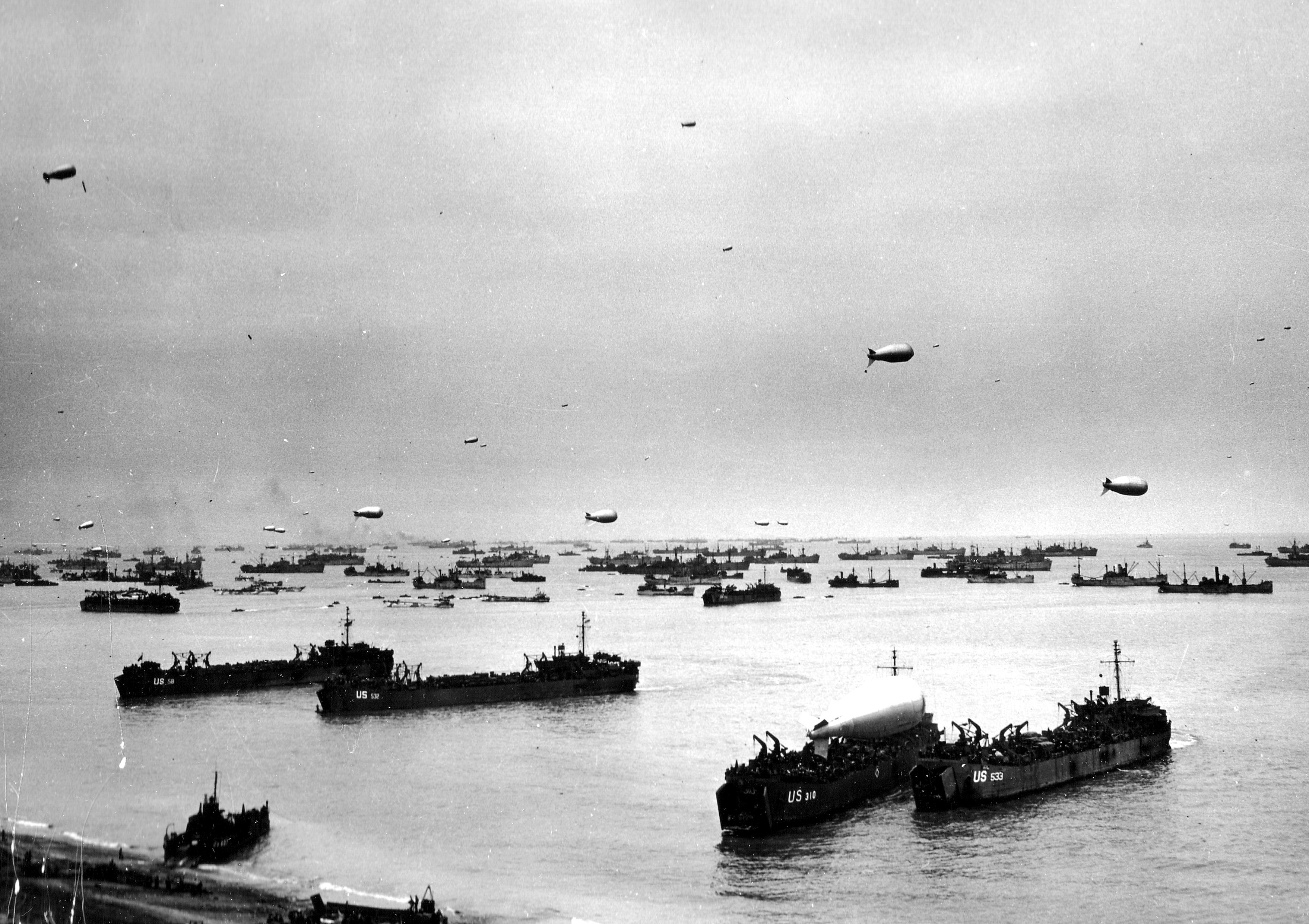
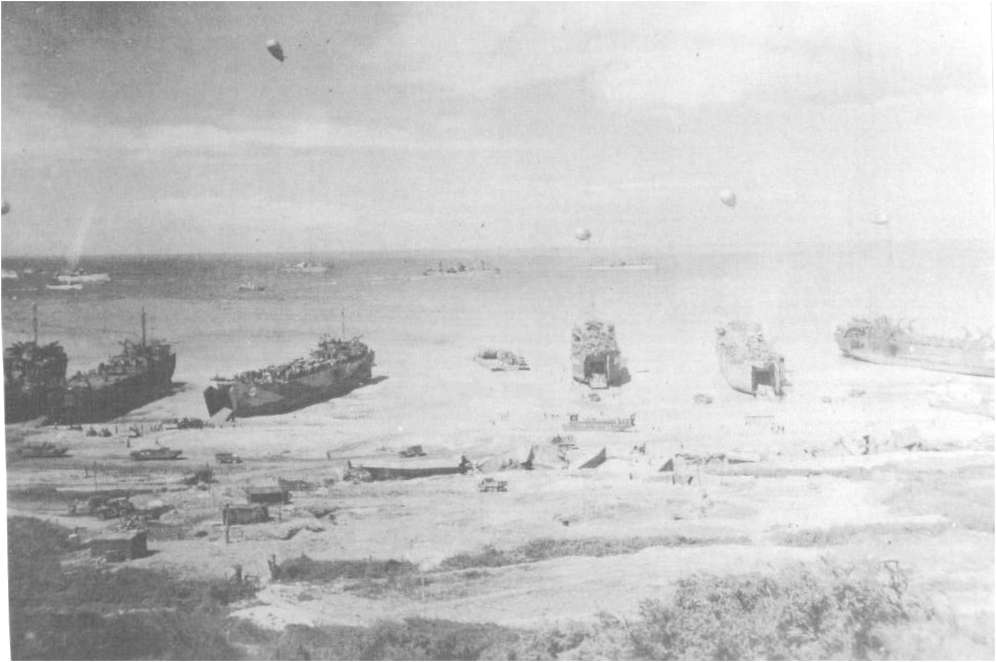
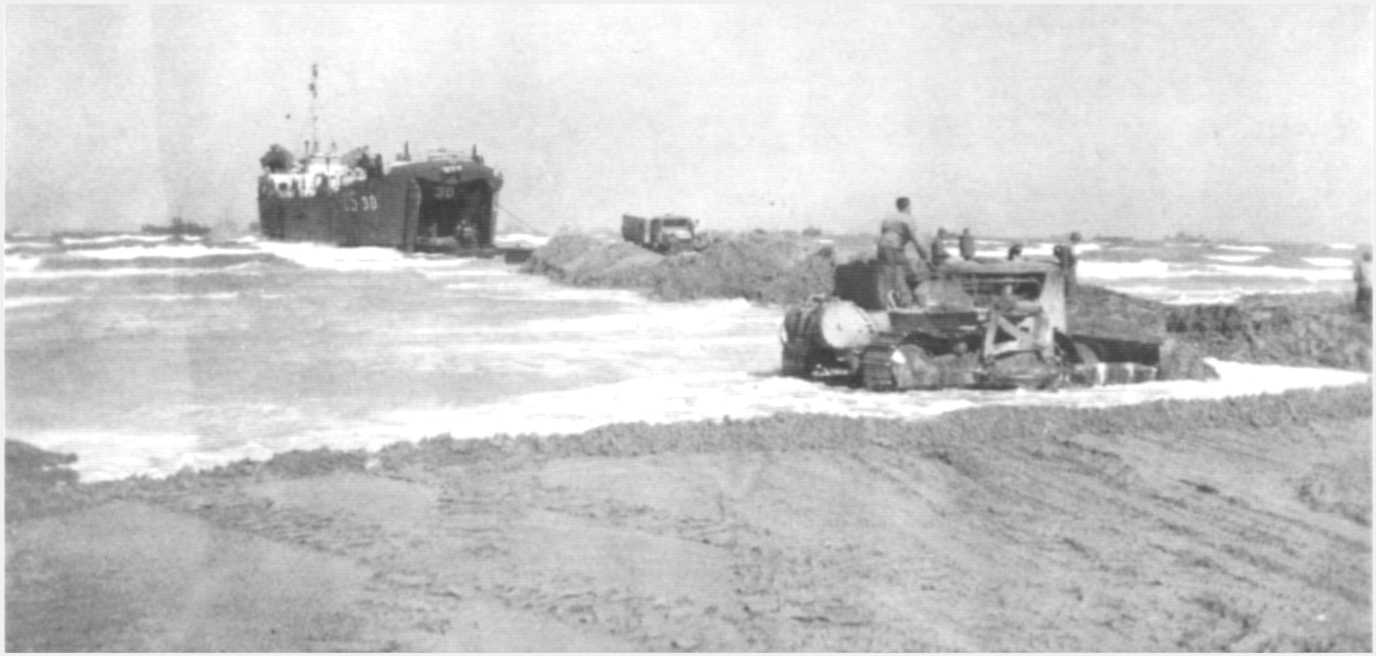
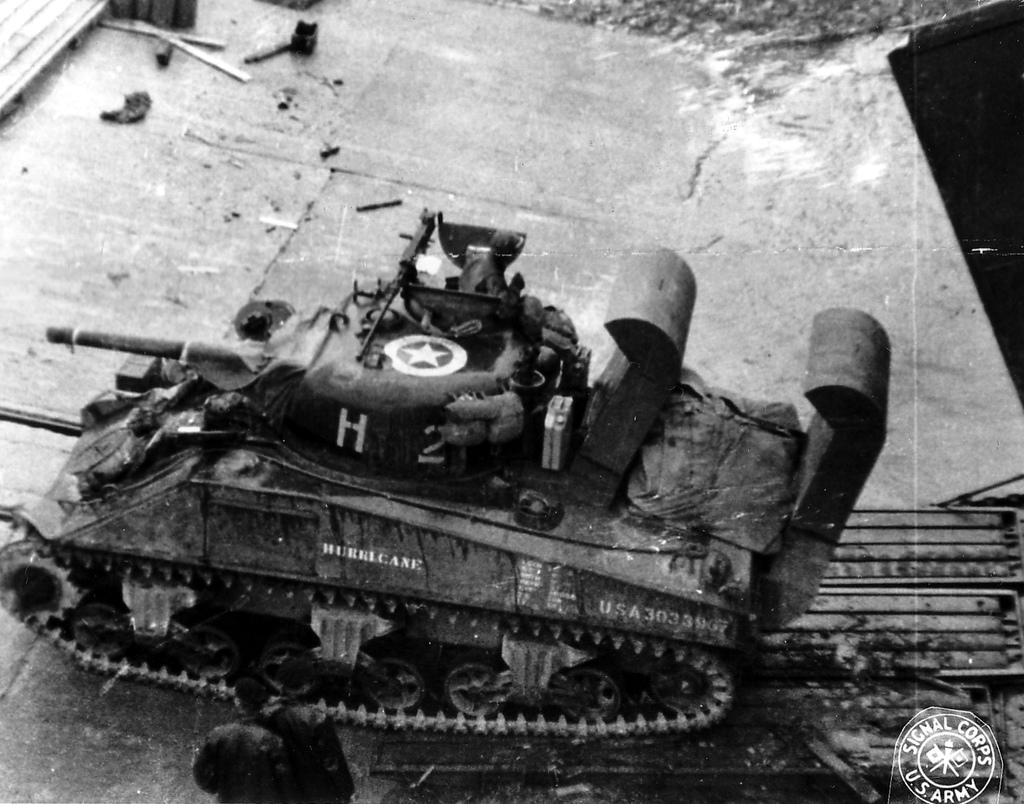
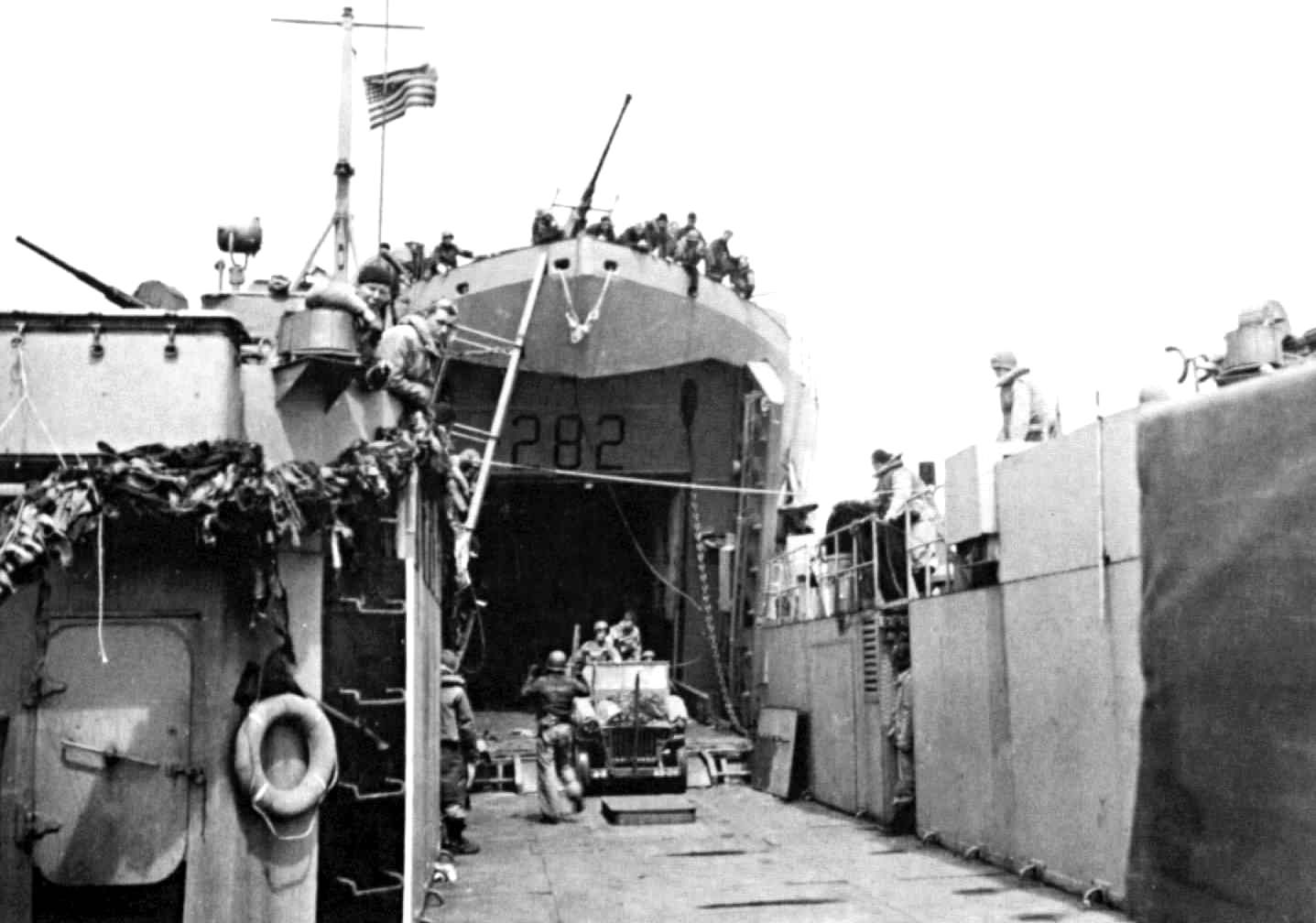
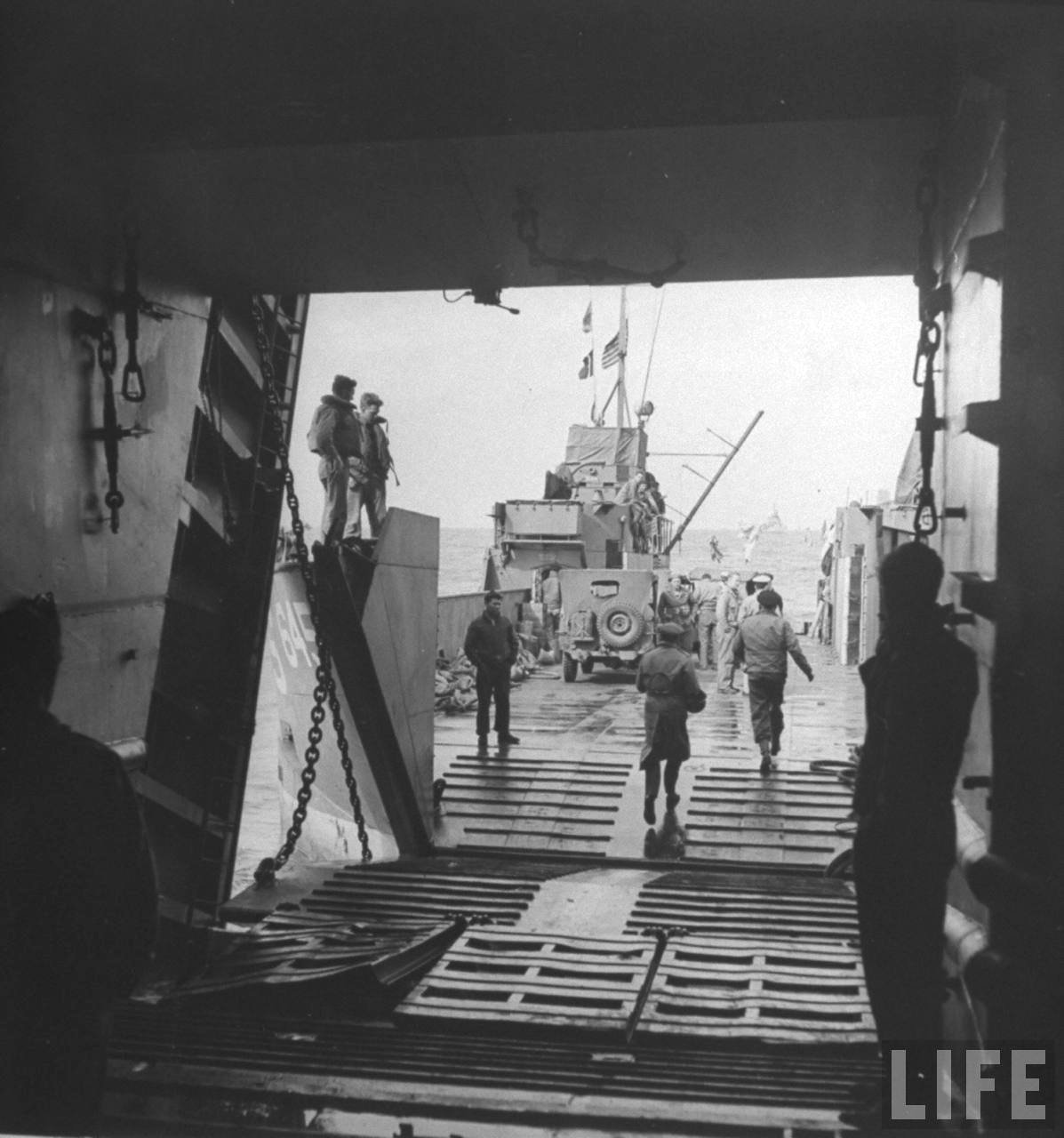
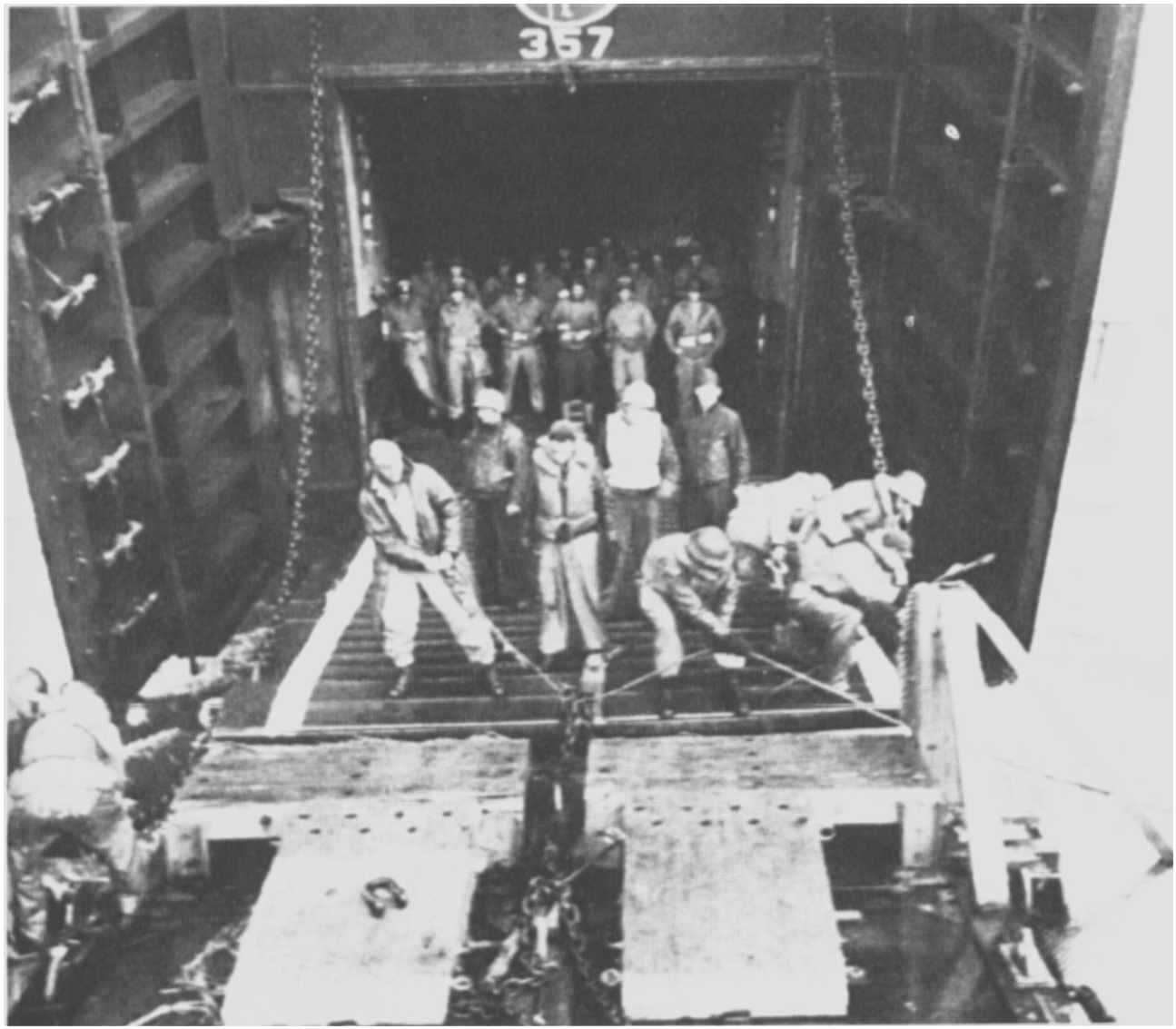
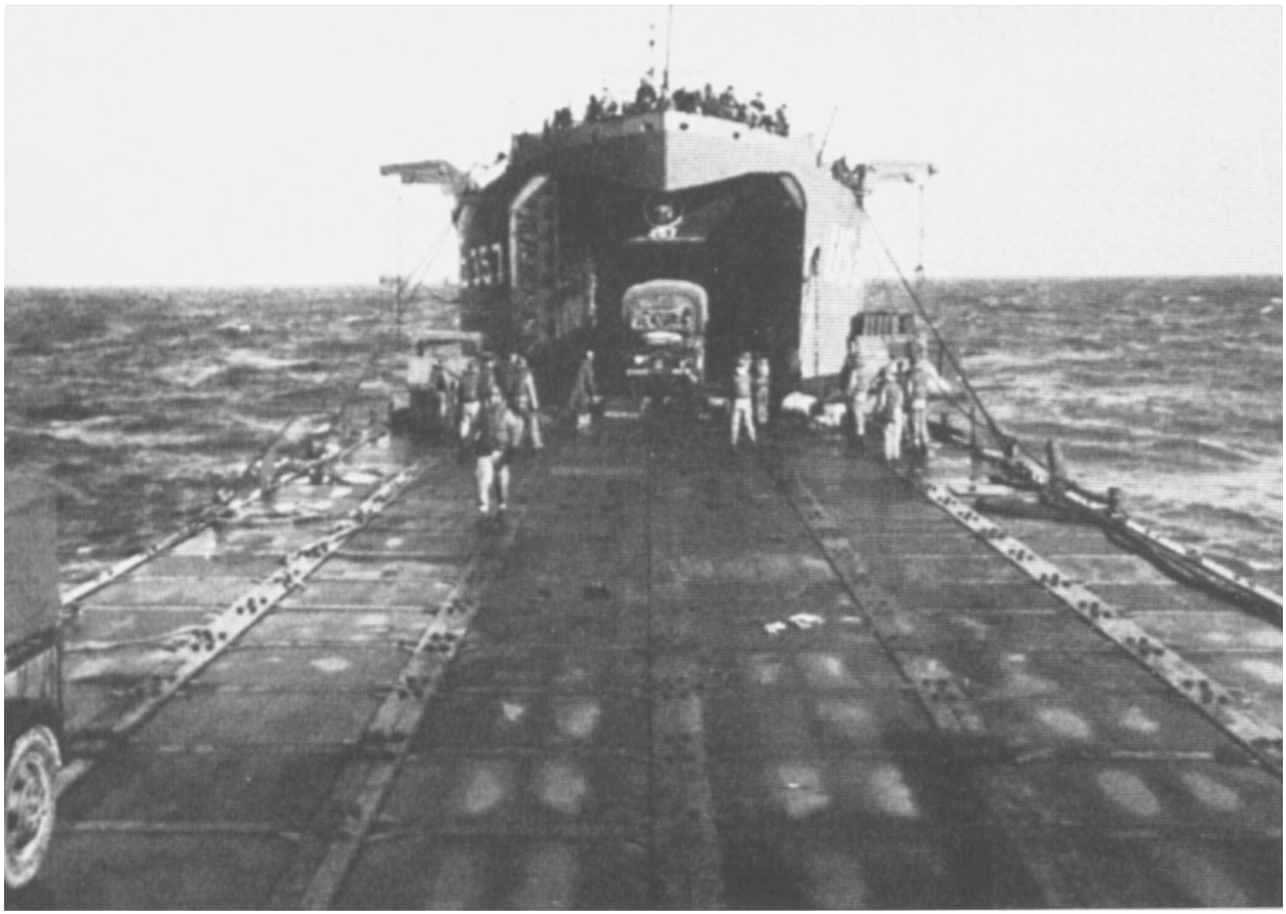
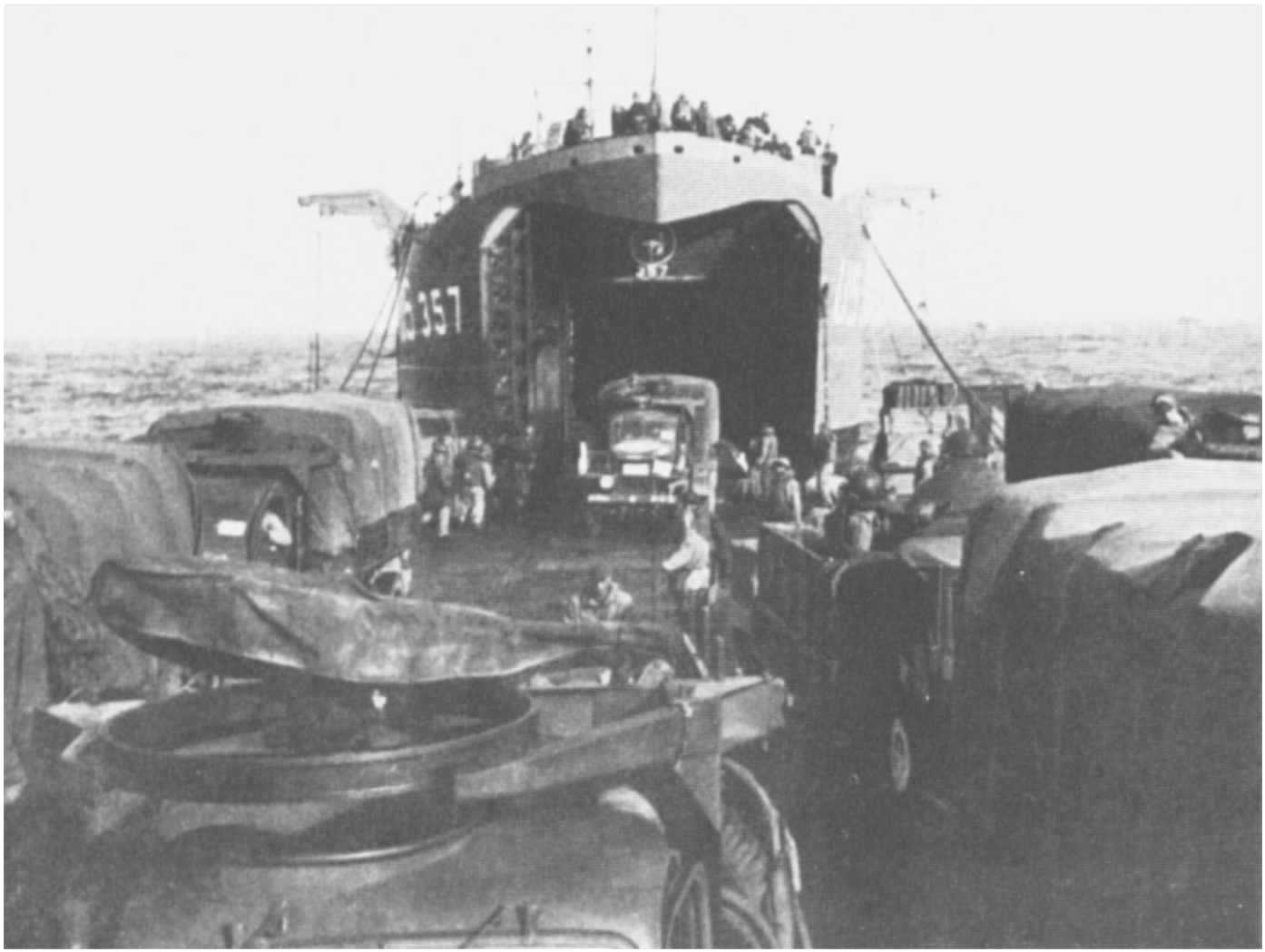
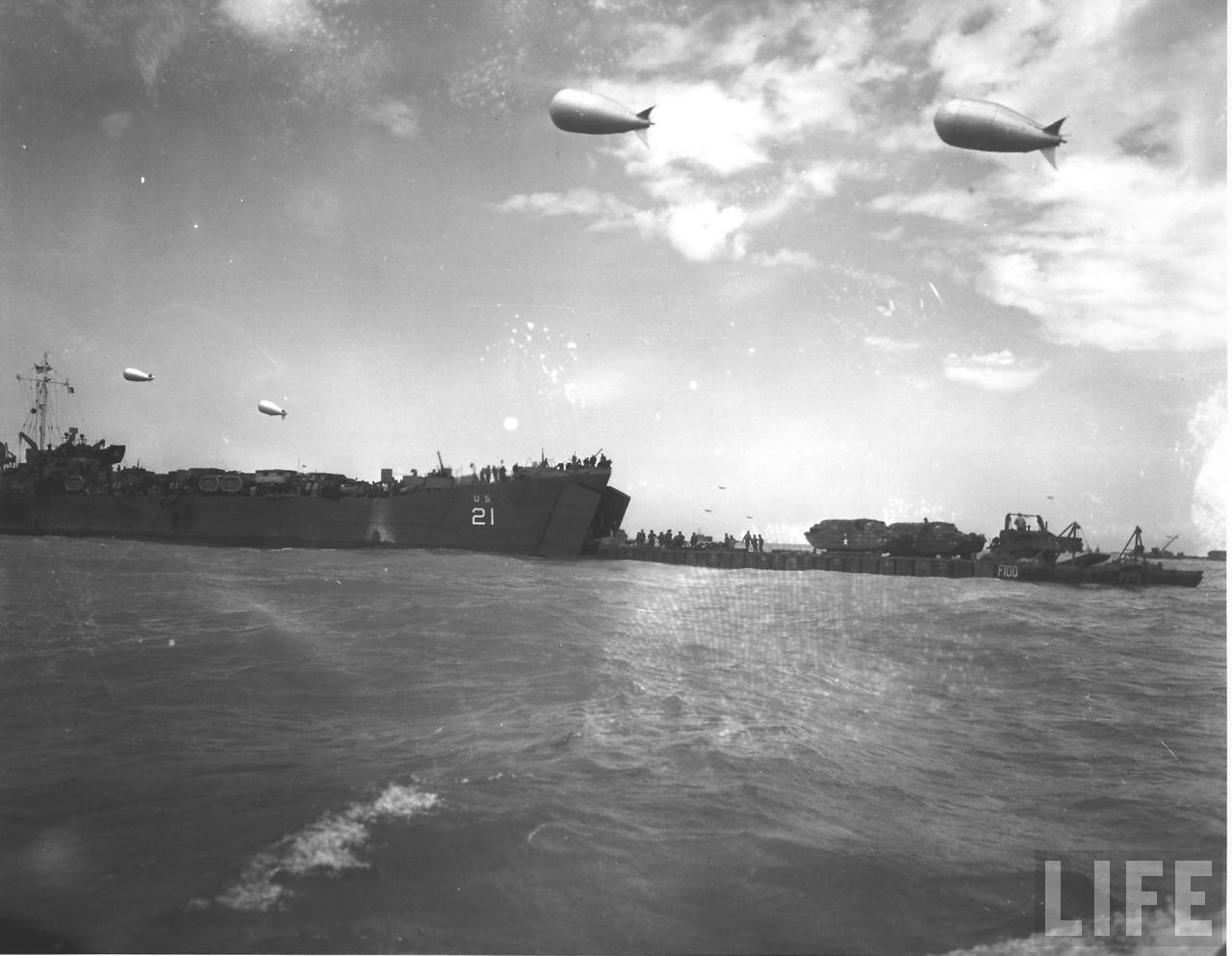
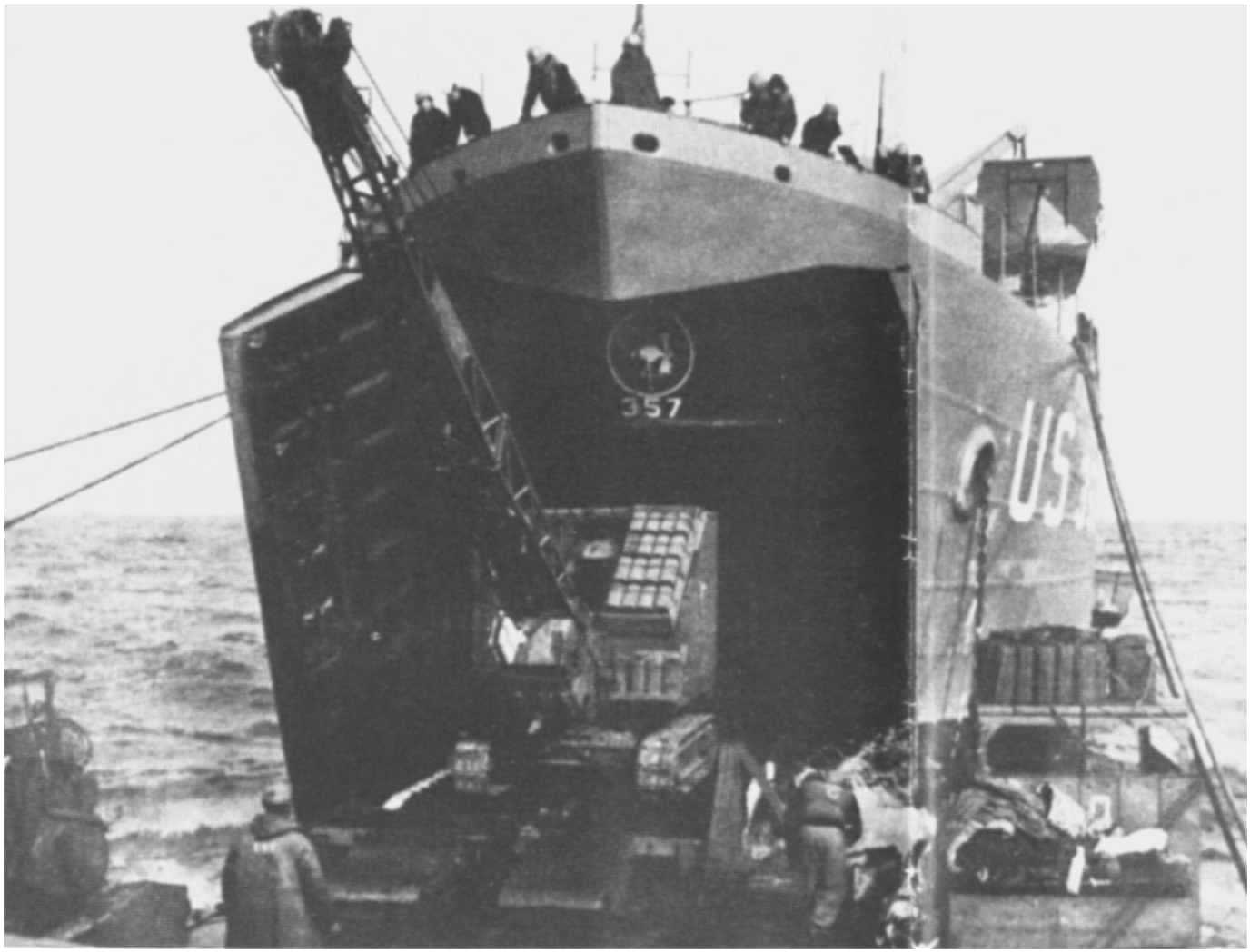
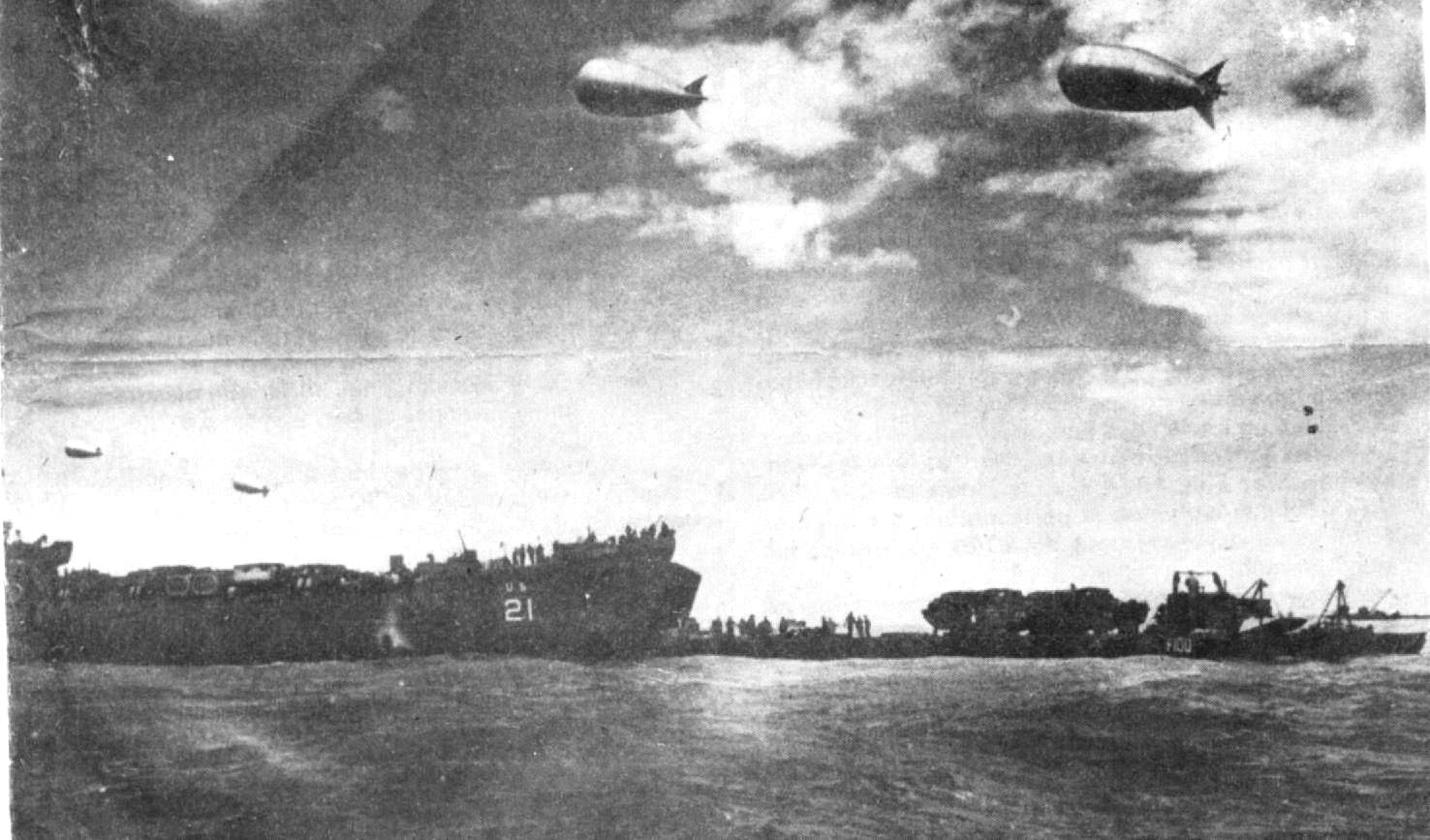
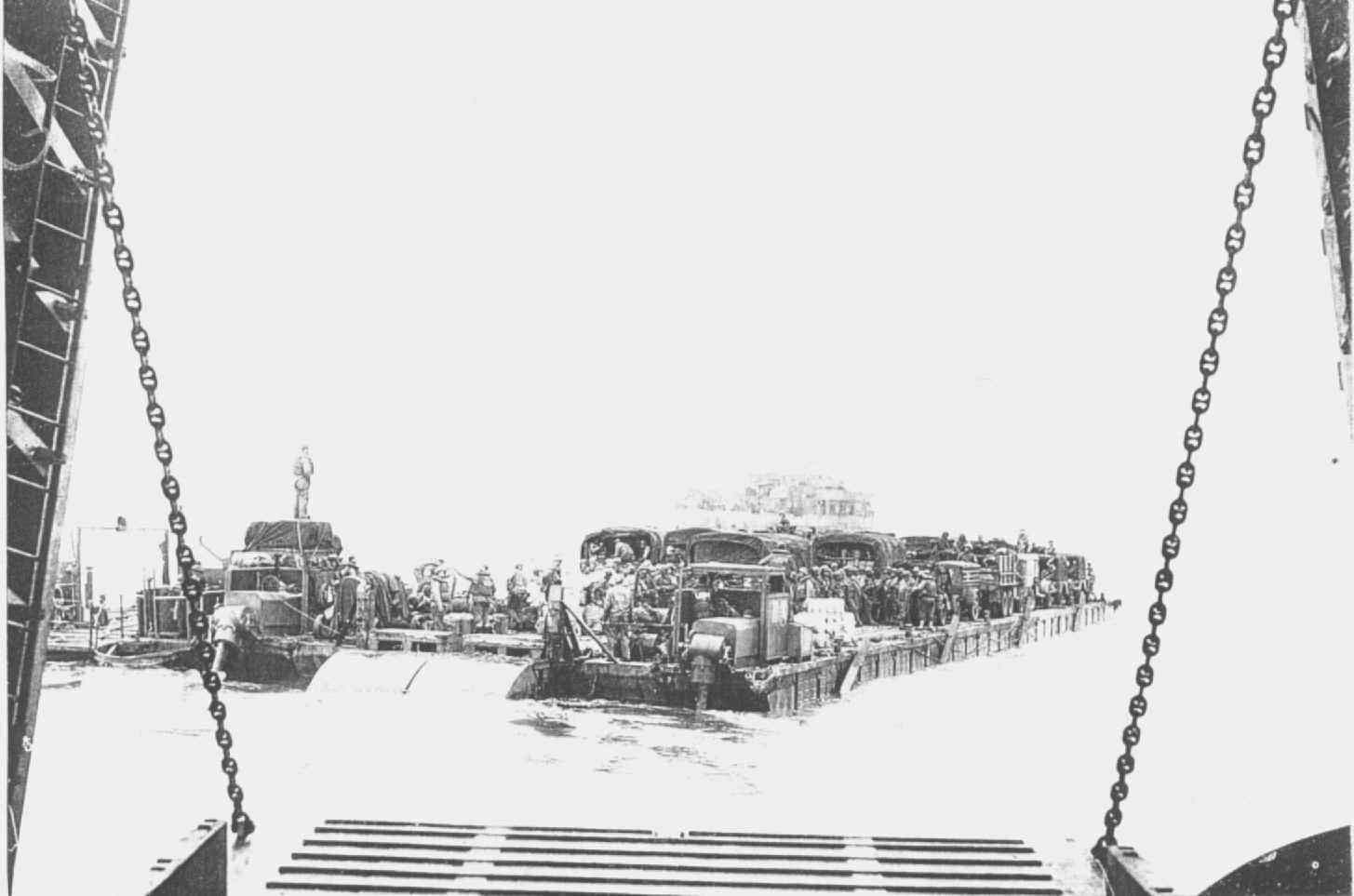
The front door-opening LSTs were used extensively in the first few weeks to unload vehicles directly on the beach. Later they were rather unloaded offshore with Rhinoferry pontoons or LCT 6 with double front and rear entrances. The grounding on the beach was more risky for the hull (especially with a rough beach like Omaha Beach) and it immobilized the empty vessel during a tide. It was advantageous in the event of an emergency of land-based needs.
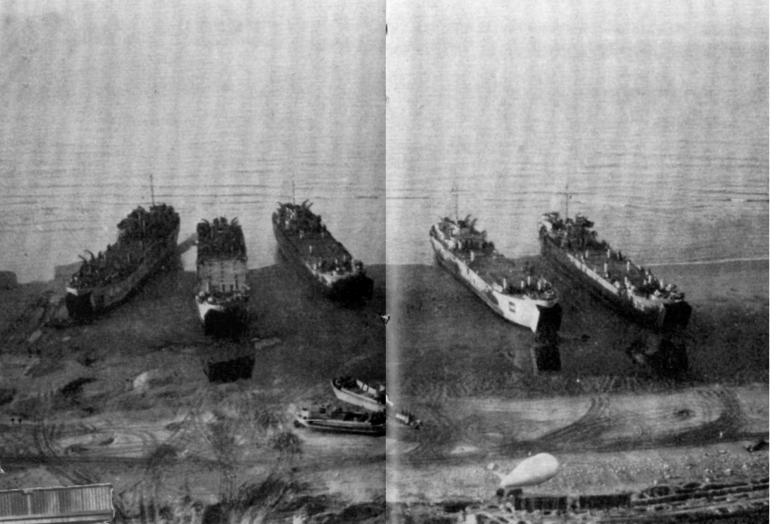
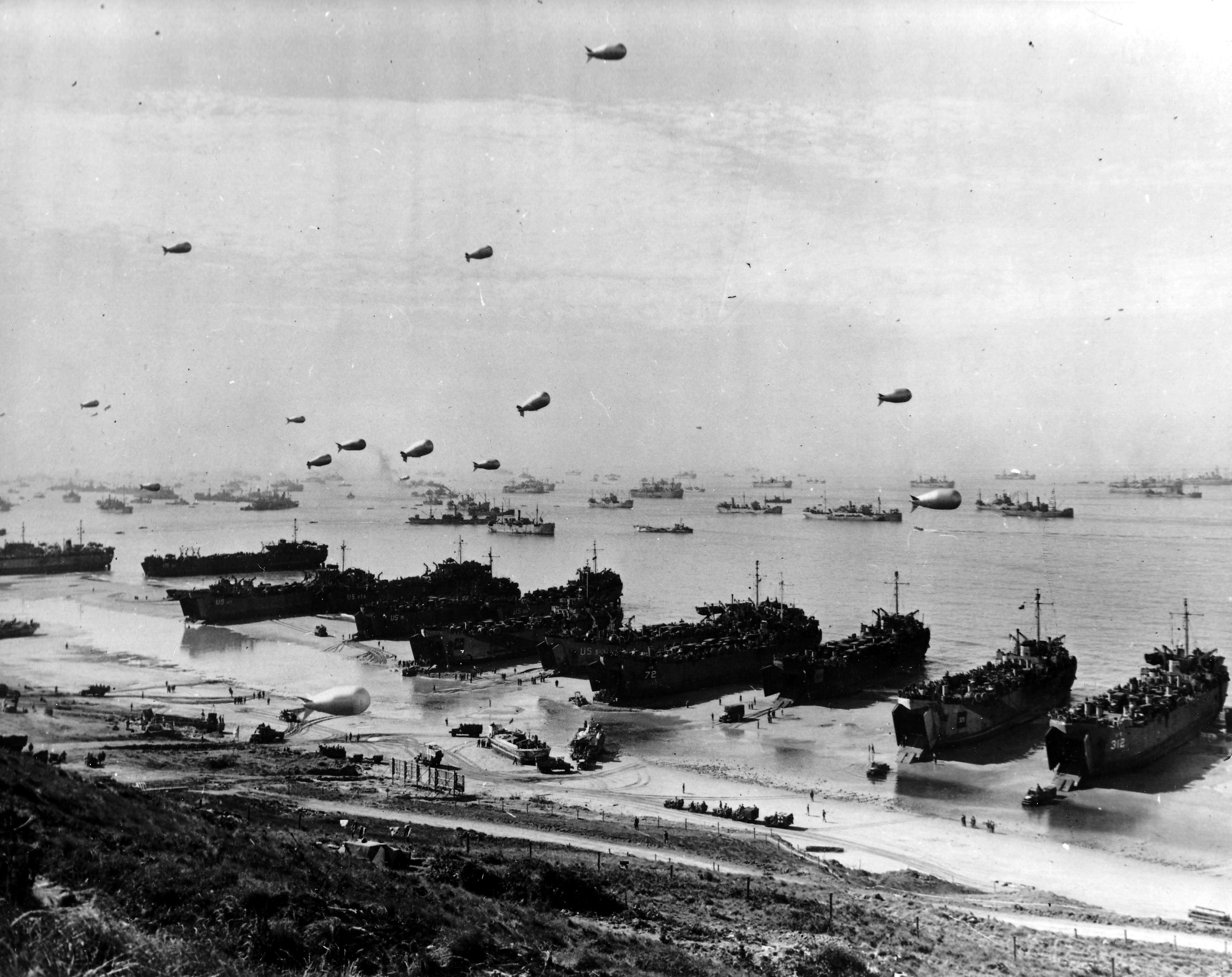
The photos below were often taken on 9 June 44, when significant ammunition delays had been accumulated since 6 June and were expected to be resolved at all costs. Finally, the LST bowls held well, but they still had to accumulate mechanical fatigue. Colleville Beach was chosen for the operation, as it was east of the Mulberry and Gooseberry construction area and thus easier to manoeuvre.
See this image in the photo library · Best resolution: 7730 × 5344 pixels (details) An impressive series of about ten LSTs stranded side by side on June 9 in Colleville The LSTs on the beach are (right to left): USS LST-312; LST-320 and LST-321 (British); USS LST-72; a U.S. LST. Navy (LST-51_ - last digit not visible); LST-324 (British); USS LST-311; USS LST-49; USS LST-373; USS LST-47 and two unidentified LSTs.
Illustration not available in the transmitted fund. (details)